Class 8 English Chapter 7 – The Case of the Fifth Word with easy NCERT Poorvi Notes and complete Book Solutions. Get simple explanations, chapter summary, important questions and answers, and revision material to understand the chapter and prepare effectively for tests and exams.
Class 8 English Poorvi
Unit 3: Mystery and Magic
The Case of the Fifth Word
Chapter Summary
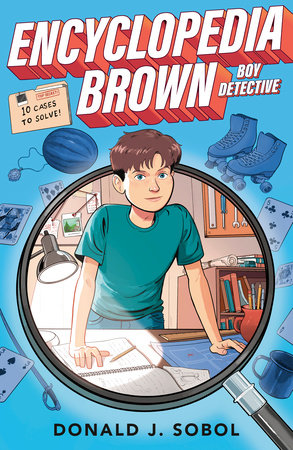
“The Case of the Fifth Word” is a detective story about Leroy Brown, popularly known as Encyclopedia Brown. He is an eighth-grade boy who has an excellent memory, reads many books and has strong logical thinking skills.
His father, Chief Brown, is the Chief of Police. Whenever the Chief faces a difficult mystery, Encyclopedia often solves it during their family dinner conversation.
One evening, Chief Brown tells the family about Tim Nolan, who has died after suffering a stroke. Nolan had once been suspected of taking part in a jewellery robbery with Daniel Davenport. No stolen jewellery had ever been found.
Before dying, Nolan leaves his property to Davenport. A sheet from his desk calendar is clipped to the will. On it are four strange words: Nom, Utes, Sweden, Hurts.
Encyclopedia notices that the words are connected with the days of the week. By removing the letters d-a-y from Monday, Tuesday, Wednesday and Thursday, the four words are formed:
Tuesday → Utes
Wednesday → Sweden
Thursday → Hurts
The missing fifth day is Friday. After removing the letters d-a-y from Friday, the word becomes Fir.
The stolen jewellery is therefore hidden under the fifth word, that is, under the young fir tree in Nolan’s nursery. The jewellery is found inside a twenty-gallon jug of earth from which the fir tree grows.
The story teaches us that careful observation, knowledge, logical thinking, memory and critical thinking can help us solve difficult problems.
Important Notes
1. Main Characters
| Character | Description |
|---|---|
| Leroy Brown | Also called Encyclopedia Brown. He is knowledgeable, clever, observant, humble and a good listener. |
| Chief Brown | Leroy’s father and Chief of Police. He is smart, quick and proud of his son. |
| Mrs. Brown | Leroy’s mother. She is intelligent, interested in the case and helps the family discuss the clues. |
| Tim Nolan | A man suspected of involvement in a jewellery robbery. Before his death, he leaves his property to Davenport. |
| Daniel Davenport | Nolan’s friend and suspected partner in the jewellery robbery. He disappears after the robbery. |
2. Important Vocabulary
| Word | Meaning |
|---|---|
| nickname | A special name given to a person |
| hold-up | A robbery using threat or violence |
| nursery | A place where young plants and trees are grown |
| testify | To give a statement in court |
| hunch | A strong feeling about something |
| loot | Stolen goods |
| stroke | A sudden serious illness affecting movement |
| will | A legal document stating what happens to a person’s property after death |
| code | A hidden message |
| confessed | Admitted |
| foreseen | Predicted |
| leafed through | Turned pages quickly |
3. The Important Code
Nom = Monday
Utes = Tuesday
Sweden = Wednesday
Hurts = Thursday
Fir = Friday
The letters d-a-y are removed from the names of the days. The fifth word is therefore Fir, which points to the young fir tree.
Let us do these activities before we read
I Work in pairs. Solve the crossword puzzle given below with the clues in the form of anagrams.
Across: 3. Declare 6. Tucks 7. Heart 9. Felt 10. Sown 12. Sword 13. Evil
Down: 1. Aces 2. Read 4. Tool 5. Alps 6. Hooks 8. Mane 11. Loves
Across:
- 3. Declare → CLEARED
- 6. Tucks → STUCK
- 7. Heart → EARTH
- 9. Felt → LEFT
- 10. Sown → OWNS
- 12. Sword → WORDS
- 13. Evil → LIVE
Down:
- 1. Aces → CASE
- 2. Read → DEAR
- 4. Tool → LOOT
- 5. Alps → PALS
- 6. Hooks → SHOOK
- 8. Mane → NAME
- 11. Loves → SOLVE
II Work in pairs. Match the different meanings of ‘case’ in Column 2 with the correct usage in the sentences in Column 1. Share your answers with your classmates and teacher.
| Column 1 | Column 2 |
|---|---|
| 1. Lalit said that he could not sing but that was not the case as he sang melodiously later. | (i) writing format |
| 2. The lawyer was waiting for the case to be taken up in court. | (ii) container |
| 3. My pencil case is a gift from my grandmother. | (iii) situation |
| 4. The subject of a formal letter is written in title case. | (iv) matter |
1 – (iii) situation
2 – (iv) matter
3 – (ii) container
4 – (i) writing format
The ‘case’ in the title refers to a matter or mystery that needs to be solved.
Let us discuss
I Complete the following statements with suitable reasons. Share your answers with your classmates and teacher.
He knew many facts, read many books and had a very good memory, like an encyclopedia.
He had a mystery that he could not solve.
He knew that his parents were discussing the case for his benefit and he wanted to listen carefully.
He knew that he was dying and wanted to leave his property to Davenport.
II Do you think Chief Brown would need Leroy’s help to solve this case? If yes, why? If no, why not?
Yes. Chief Brown had not understood the meaning of the four strange words. Leroy used his knowledge and logical thinking to decode them and find the hiding place of the jewellery.
Let us discuss
I A fact is something that can be proven true or false. A fact is not based on people’s beliefs. An opinion on the other hand is a belief, feeling, or judgement, and can vary from one person to another. An opinion cannot be proven.
Identify which of the following statements from part I and II of the story are facts or opinions. One example has been done for you. Share your answers with your classmates and teacher.
II Complete the table by choosing the character traits of Leroy given in the box below. There is an extra word that you do not need. One example has been done for you.
cleverness knowledgeable keen listener gentle humble
| Textual Evidences | Traits |
|---|---|
| 1. He read more books than anyone in Idaville, and he never forgot a fact. | knowledgeable |
| 2. Encyclopedia never spoke of the help he gave his father. He didn’t want to seem different from other boys. | humble |
| 3. Encyclopedia sat quietly. He knew his mother and father were discussing the case for his benefit. | keen listener |
| 4. Usually, he needed to ask only one question to solve a case before dessert. | cleverness |
Extra word: gentle
Let us think and reflect
1. Chief Brown would have liked to tell everyone about his only child. But who would believe him? Who would believe that the best detective alive was an eighth grader? So, he said nothing.
Encyclopedia never spoke of the help he gave his father. He didn’t want to seem different from other boys. But there was nothing he could do about his nickname. He was stuck with it.
Only his parents and teachers called him by his real name, Leroy. Everyone else called him Encyclopedia.
Chief Brown’s dilemma can be called unique because____________.
His son was only an eighth grader but could solve difficult cases that even the police could not solve, and Chief Brown felt that people would not believe him.
A. He is shy and lacks confidence in his abilities to share his insights.
B. He wants to avoid the jealousy others might feel about his skills.
C. He desires to blend with the other boys to prevent seeming different.
D. He is embarrassed about being smarter than most adults around him.
A. For them he is more than his unique abilities; he is their child, with a personal identity.
B. Calling him by his real name reflects their affection and the desire to acknowledge him as an ordinary boy.
C. They want him to be remembered as different from the others around.
It means that he could not get rid of the nickname because everyone except his parents and teachers called him Encyclopedia.
2. Chief Brown studied the four words: Nom Utes Sweden Hurts. He shook his head and passed the notebook to Mrs. Brown again. “Can you figure it out?”
“Nom is a shortening of nominative, a grammatical term,” stated Mrs. Brown, who had taught English and other subjects in high school. “Utes is an American Indian tribe. Sweden is a country in northern Europe. Hurts is hurts.”
She lifted her gaze to Encyclopedia and shook her head. “I can’t figure it out,” she confessed.
“Davenport disappeared right after the hold-up,” Encyclopedia reminded her.
A. He is confident that the words are a clue.
B. He is confused, unable to make sense of the words.
C. He believes the words are random and meaningless.
D. He thinks the words are unrelated to the case.
Mrs. Brown explained the actual meanings of the individual words rather than decoding the hidden message behind them.
She explained the ordinary meanings of the words but could not find the hidden code.
It suggests that the words form a hidden code and their real meaning cannot be understood by taking the words separately.
The purpose of Encyclopedia’s reminder in the last line of the extract was to _________________. (refocus the discussion on the context of the crime/suggest that the coded message was meant for Davenport/imply that the message was likely a clue about the location of the stolen jewellery)
The purpose was to imply that the message was likely a clue about the location of the stolen jewellery.
II Answer the following questions.
They became friendly while they were in prison. Davenport later came to live with Nolan. Nolan also left his property, including the nursery, to Davenport in his will.
Davenport probably disappeared because he wanted to avoid the police after the robbery. If Nolan had not died, they might have continued hiding the jewellery until it was safe to use or share it.
It shows that she is intelligent, observant and interested in solving mysteries. She also remembers important details from the old case.
Chief Brown was proud because Leroy was very intelligent and could solve difficult police mysteries. He was also humble and helped his father quietly.
Nolan and Davenport had met in prison, Davenport came to live with Nolan before the robbery, the clerk thought Nolan was one of the robbers, and Davenport disappeared after the robbery. These facts made Chief Brown suspicious.
The four-word message is the main clue in the mystery. Encyclopedia understands that the words represent the first four days of the week. The missing fifth word, Fir, points to the fir tree where the jewellery is hidden.
You may begin it like this:
Encyclopedia was a knowledgeable eighth grader who never forgot a fact that he read.
Encyclopedia was a knowledgeable and clever eighth grader. He read many books and remembered facts easily. He was a keen listener and carefully observed the discussion between his parents. He was humble and did not boast about helping his father. His logical thinking helped him decode the four strange words and solve the mystery of the stolen jewellery.
Let us learn
I Match the phrasal verbs from the text given in Column 1 with their meanings in Column 2. You may refer to a dictionary.
| Column 1 | Column 2 |
|---|---|
| 1. put on | (i) appeared, been discovered |
| 2. cooled down | (ii) solve a problem |
| 3. turned up | (iii) became normal or calmed |
| 4. make of | (iv) wear (clothes, hat, etc.) |
| 5. figure out | (v) escaped without being punished |
| 6. got away with | (vi) have an idea or understanding of something |
1. put on – (iv) wear (clothes, hat, etc.)
2. cooled down – (iii) became normal or calmed
3. turned up – (i) appeared, been discovered
4. make of – (vi) have an idea or understanding of something
5. figure out – (ii) solve a problem
6. got away with – (v) escaped without being punished
Now, fill in the blanks with the phrasal verbs given in Column 1.
A. Finally, some important evidence about the case has _______________.
B. After I _______________, I understood that I had made a big mistake.
C. I couldn’t _______________ why he was angry with me.
D. He _______________ his special coat and went to his friend’s birthday party.
E. Ravi forgets to do his homework but he _______________ it as teacher didn’t ask for it that day.
F. I do not know what to _______________ his behaviour.
II Fill in the blanks in the following sentences by choosing the correct word pairs from the box given below.
week/weak dying/dyeing fore/four peace/piece break/brake
1. After running for 50 kilometres last _________________, I felt _________________ for two days.
2. When the committee met yesterday, they brought _________________ local cases to the _________________.
3. While learning to drive, Rina used too much force on the _________________, causing the car to _________________ down.
4. He has composed a beautiful _________________ of music in order to bring _________________ to thousands of people.
5. She was busy _________________ her hair not caring about the _________________ flowers in her garden.
III Leroy solved the mystery of the missing fifth word with his critical thinking abilities. Work in pairs to solve the puzzles given in the illustrations below and infer what they say. One example has been done for you.
Answer: Top secret
Rebus answers:
- AGED AGED AGED – Middle Ages
- Try / stand / 2 – Try to understand
- GO / It / It / It / It – Go for it
- Six sense words – Sixth sense
- M 1 LL I O N – One in a million
- ONCE – Once in a blue moon
- ROADS crossing each other – Crossroads
IV Spoonerism is a mistake made when speaking, where the first sounds of the words in a phrase or a sentence are exchanged with each other. This usually gives a funny meaning.
Some examples of spoonerism are saying ‘wrong load’ instead of ‘long road’, ‘round of mice’ instead of ‘mound of rice’.
Find the correct order for the following spoonerisms.
| Given | Correct phrase |
|---|---|
| 1. knowing sits | sewing kits |
| 2. it’s roaring with pain. | it’s pouring with rain. |
| 3. plaster man | master plan |
| 4. blarm wanket | warm blanket |
| 5. tars and crucks | cars and trucks |
| 6. shake a tower | take a shower |
| 7. bead a rook | read a book |
| 8. mardon me padam | pardon me madam |
V Read the following sentences from the text and study the highlighted words.
- Everyone thought that he must be the smartest police chief in the country.
- She read what he had copied.
- They tell where the jewellery is hidden.
- “Nom is a shortening of nominative, a grammatical term,” stated Mrs. Brown, who had taught English and other subjects in high school.
- “Nolan and Davenport had met,” Chief Brown said, “while both were in prison in South Carolina.”
- When he came up against a case he couldn’t solve, he acted at once.
- The code is simple, especially as it’s written on a sheet from a calendar.
- They became friendly because of shared interests.
- Encyclopedia solved the case for him before dinner was over.
Now, fill in the blanks with the words in the box given below to complete the following sentences. There are two extra words that you do not need.
where why who though which when because if how whose
Detective stories are exciting, keeping readers guessing (i) who the real culprit is. They take place in settings (ii) where clues are hidden carefully. (iii) Though the mystery seems tricky, a clever detective always finds answers. Readers often wonder (iv) why criminals leave small but important clues. The challenge is to decide (v) which suspect is guilty. (vi) When the truth is revealed, everything makes sense. But one may wonder (vii) if they could have solved it themselves. These stories are fun (viii) because they make readers think till the very end.
VI Combine the following pairs of sentences using the word given in brackets. One example has been done for you.
1. We gave him the signal. He was waiting for the signal. (that)
2. We went to a place. The incident occurred there. (where)
3. Teacher said she would retire soon. She is now nearly sixty. (who)
4. It was the day. Half the class was absent. (when)
VII Read the following sentences from the text.
- “What’s suspicious about that?” Mrs. Brown asked.
- “What do you make of the four words, Leroy?”
- “Wasn’t he mixed up in a jewellery robbery a few years ago?”
- “Didn’t you search Nolan’s house, dear?”
- “Is there a young fir tree in Mr. Nolan’s palm-tree nursery?”
The given sentences are the direct words of the speaker, hence, they are in direct speech.
While reporting these direct words to someone else at some other time and some other place, we make certain modifications in person, tense, and adverbs of place and time.
Indirect Speech
(i) Mrs. Brown asked ______________________________________________.
(ii) Mrs. Brown questioned Leroy __________________________________.
(iii) Mrs. Brown inquired __________________________________________.
(iv) Mrs. Brown asked Chief Brown ________________________________.
(v) Mrs. Brown inquired ___________________________________________.
VIII Rewrite the following sentences in Reported Speech.
1. “Why did you stop talking to me?” asked Rohan.
Rohan questioned __________________________________________________.
2. “Did you enjoy the family gathering yesterday?” asked my aunt.
My aunt asked ______________________________________________________.
3. “When will you visit us again?” asked my grandmother.
My grandmother inquired _________________________________________.
4. Madavi said to Ravi, “Will you come with me to meet our old teacher tomorrow?” asked Madavi.
Madavi asked Ravi __________________________________________________.
5. My friend said, “What gift are you planning to give your brother?”
My friend inquired _________________________________________________.
6. “Shall I carry these notebooks to the staffroom, Ma’am?” asked Veenu.
Veenu asked her teacher ____________________________________________.
IX Read the conversation between Aditi and Rahul.
Aditi: Did you see anyone leave a package near the lift?
Rahul: I noticed a man wearing a blue jacket drop it off.
Aditi: What time did you see this happen?
Rahul: It was around 6:45 p.m.
Aditi: Were you able to see his face?
Rahul: He wore a hood and so I couldn’t see his face.
Complete the following paragraph by transforming the dialogue in indirect speech.
Aditi asked Rahul 1. ___________________________________________________.
Rahul replied that he had noticed a man wearing a blue jacket drop it off.
Aditi asked Rahul 2. ___________________________________________________.
Rahul replied that it had been around 6.45 p.m.
Aditi further inquired 3. ______________________________________________.
Rahul said that he had worn a hood, so he couldn’t see his face.
Let us listen
I You will listen to a podcast about ways of improving observation skills. As you listen, mark the statements 1–4 as true or false.
- Observation skills help improve your common sense.
- Rushing through tasks helps you focus better and observe more.
- Taking notes or making sketches helps with what you observe.
- Incorporating tips on observation skills will soon lead to success.
1. True
2. False
3. True
4. True
II You will once again listen to the podcast. As you listen, complete the given sentences by filling in the blanks with one to three exact words you hear.
1. It is important to slow down and ___________________ to notice several aspects around you more clearly.
2. The more senses like hearing and smelling you use, the more ___________________ you absorb.
3. People who are ___________________ tend to be better observers because they seek to understand what they notice.
4. When you make a note of things, it helps reinforce the ________________ in your memory.
5. Practising mindfulness helps a person stay ___________________ with their surroundings.
Let us speak
I Read the following words from the text loudly with the help of pronunciation guide given in brackets.
| Word | Pronunciation |
|---|---|
| January | ja-nyoo-uh-ree |
| sour | sau-uh |
| pizza | peet-zaa |
| Wednesday | wenz-day |
| bowl | bol |
| buffet | buh-fay |
| pronunciation | pruh-nuhn-see-ay-shn |
| jewellery | jool-ree |
| clerk | claak |
| dessert | dih-zuht |
II Work in groups of five or six. Conduct a group discussion on the topic, ‘The Interesting Aspects of a Mystery Story’.
Sample group discussion:
Mystery stories are interesting because they contain clues and surprising events. They make readers curious about what will happen next.
One speaker may say that clues are the most interesting part because readers can try to solve the mystery themselves.
Another speaker may say that unexpected endings make mystery stories exciting.
A third speaker may add that clever detectives use observation and logical thinking to solve problems.
The moderator can conclude that mystery stories are enjoyable because they make readers think carefully and look for hidden clues.
Let us write
I A report is written for an event that has already occurred. The purpose of a report is to provide first-hand details of an incident or event. It presents the information in a proper sequence.
Read the sample report written about the ‘Inter-school Football Tournament’ organised by your Vidyalaya.
Now, as a member of the Art and Craft Club, write a report on an ‘Inter-school Art Exhibition’ organised by your school. Include the necessary details.
Inter-school Art Exhibition
By: Riya, Class VIII
An Inter-school Art Exhibition was organised by our Vidyalaya on 15 July 2026 in the school activity hall. Students from several schools participated in the exhibition and displayed paintings, drawings, models and craft items.
The exhibition was inaugurated by the Chief Guest in the presence of teachers, students and participating teams. The visitors moved around the exhibition and appreciated the creativity and hard work of the students.
The students explained their artwork and models to the visitors. The exhibits included nature paintings, traditional art, recycled-material models and decorative craftwork. The event helped students develop creativity, confidence and teamwork.
At the end of the exhibition, the best exhibits were recognised and students were given certificates. The exhibition was a great success and encouraged students to take greater interest in art and creative activities.
Let us explore
I Work in pairs. Read the words and observe the images given below. Check if your answers match. Share your answers with your classmates and teacher.
These are optical illusions which may trick the eye and make you think that you can see two different things.
Common identifications for the optical illusions:
- Two faces or a vase
- A young woman or an old woman
- A duck or a rabbit
- The word or image can show two different forms depending on how we look at it.
- Two different faces or shapes may appear in the same picture.
- Two different objects may be seen in the same picture.
The main idea is that optical illusions show how the same picture can be understood in different ways.
II Read the steps to play a language game—Name the Mystery Object.
- Divide the class into teams.
- Each team chooses an object and prepares three hints to enable the other teams to name the object.
- Each team takes turns to name the object given by the other team.
- If a team names the object with the first hint, they get 20 points, with the second hint 10 points, and with the third hint 5 points.
One example with three hints:
- I display information for all to share, with a swipe I’m clean and bare.
- I am rectangular or a square, whom neither teacher nor student can spare.
- I am mostly black, sometimes green, now in white too I am seen.
It displays information for students and teachers and can be black, green or white.
III Visit the library and look for an encyclopedia. What is it? Check how it is different from a dictionary. Share your answers with your classmates and teacher.
An encyclopedia is a reference book or collection of books containing information about many subjects, people, places, events and ideas.
| Encyclopedia | Dictionary |
|---|---|
| Gives information about many subjects. | Gives meanings, spellings and pronunciations of words. |
| Contains facts and explanations. | Mainly explains words and their usage. |
| Usually contains longer information about a topic. | Usually gives shorter meanings of words. |
IV A thesaurus is a reference book or digital tool that provides a collection of words with similar meanings, allowing users to find alternative words or phrases to express the same idea. Choose any five words and find out their alternative words from the thesaurus.
| Word | Alternative words |
|---|---|
| smart | clever, bright, intelligent |
| solve | answer, decode, figure out |
| hidden | secret, concealed, covered |
| quietly | silently, softly, peacefully |
| help | assist, aid, support |
Quick Revision
Remember these points
- Leroy Brown is called Encyclopedia because he knows and remembers many facts.
- Chief Brown is Leroy’s father and the Chief of Police.
- Tim Nolan and Daniel Davenport were suspected of a jewellery robbery.
- Nolan leaves his property to Davenport.
- The four strange words are Nom, Utes, Sweden and Hurts.
- They represent Monday, Tuesday, Wednesday and Thursday.
- The missing fifth word is Fir, representing Friday.
- The jewellery is hidden under the young fir tree.
- Encyclopedia solves the mystery through observation, knowledge and logical thinking.
- The story teaches us the importance of critical thinking and careful observation.
The Most Important Answer
What was the fifth word?
The fifth word was “Fir”, made from Friday after removing the letters d-a-y. The jewellery was hidden under the young fir tree.
Prepare this worksheet to practise important questions and revision exercises from Chapter 7 It will help you understand the chapter, revise key concepts, and prepare effectively for tests and exams.
Class 8 English Chapter 7, The Case of the Fifth Word, Class 8 English Chapter 7 Notes, The Case of the Fifth Word Notes and Solutions, Class 8 English Chapter 7 Book Solutions, The Case of the Fifth Word Questions and Answers, NCERT Class 8 English, NCERT Class 8 English Poorvi, CBSE Class 8 English, Class 8 English Notes, Class 8 English Book Solutions, Class 8 English Study Material, Class 8 English Revision Notes