Class 8 English Chapter 15 – Bibha Chowdhuri: The Beam of Light that Lit the Path for Women in Indian Science with easy NCERT Poorvi Notes and complete Book Solutions. Get simple explanations, important ideas, questions and answers, and revision material for effective learning and exam preparation.
Class 8 English Poorvi
Bibha Chowdhuri: The Beam of Light that Lit the Path for Women in Indian Science
Chapter Summary
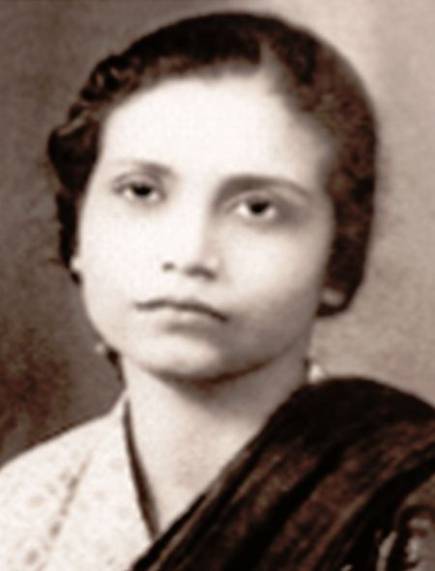
Bibha Chowdhuri was an Indian physicist who made important contributions to cosmic rays and high-energy particle physics. She was born in Kolkata in 1913 and worked in a field that was largely dominated by men.
Through persistence and hard work, she studied at the University of Manchester under Nobel Laureate Patrick M. S. Blackett and completed research on cosmic rays. She later returned to India and became the first woman faculty member at the Tata Institute of Fundamental Research.
Her scientific work included research on cosmic rays and subatomic particles. She worked at important Indian research institutions, including TIFR, the Physical Research Laboratory and the Saha Institute of Nuclear Physics.
Although she received little public recognition during her lifetime, her scientific contribution was later remembered. In 2019, the International Astronomical Union honoured her by naming a star Bibha. In 2020, the Government of India declared a chair professorship in her name.
The chapter then connects her pioneering work with women scientists working in Indian science and space research today. It shows how persistence, curiosity and scientific ability can help break barriers.
Key Points at a Glance
| Point | Easy Explanation |
|---|---|
| Born | 1913, Kolkata |
| Field | Physics, cosmic rays and particle physics |
| Manchester | She studied cosmic rays under Patrick M. S. Blackett. |
| TIFR | She became its first woman faculty member. |
| Research | Cosmic rays and subatomic particles |
| Star named Bibha | Her legacy was honoured by the International Astronomical Union. |
| 2020 recognition | A chair professorship was declared in her name. |
Important Vocabulary
| Word | Easy Meaning |
|---|---|
| trailblazers | People who are the first to do something new |
| equitable | Fair and equal |
| defied the odds | Succeeded despite difficulties |
| towering | Very great or impressive |
| persistence | Continuing to work despite difficulty |
| delved | Studied something deeply |
| sceptical | Doubtful |
| notable | Important or remarkable |
| periphery | Outer edge or boundary |
| acclaim | Public praise |
| tenacity | Strong determination |
| ignite | To arouse or start something |
| autonomous | Independent |
| arduous | Very difficult and requiring effort |
| stark | Very clear |
| beacon | A person or thing that gives hope and guidance |
Let us do these activities before we read.
I Work in pairs. What qualities do you associate with a scientist? Share your answers with your classmates and teacher. Complete the word web given below.
- Curious
- Creative
- Patient
- Hard-working
- Observant
- Logical
- Persistent
- Open-minded
II Some pictures of women scientists are given below. What do you know about their work? Share your answers with your classmates and teacher.
Let us discuss
I Arrange the following events from Bibha Chowdhuri’s life in the correct order of occurrence. Share your answers with your classmates and teacher.
Let us think and reflect
I Read the given extracts and answer the questions that follow.
(i) Why is the mention of Patrick M.S. Blackett, a Nobel Laureate, significant in this extract?
(ii) What can be inferred about the public perception of women scientists in the 1940s from the title given to her by the press ‘India’s New Woman Scientist’?
A. Women scientists were widely accepted and celebrated at that time.
B. The world was still doubtful about the capabilities of women scientists.
C. Women scientists were as common and renowned as men in the 1940s.
D. Women were not allowed to study sciences or pursue scientific careers.
(iii) In the phrase ‘celebrated Nobel Laureate,’ the word ‘celebrated’ refers to all of the following EXCEPT someone who is
A. famous and highly respected
B. frequently seen in public
C. renowned for their achievements
D. well-regarded in their field
(iv) Complete the following sentence suitably.
The phrase ‘She has an eye for Cosmic Rays’ suggests that __________.
(i) What can be inferred about the challenges faced by women scientists today, as compared to Bibha Chowdhuri’s era?
A. Women scientists no longer face any barriers.
B. The challenges remain, but progress has been made.
C. The struggles have become more difficult over time.
D. The struggles are the same as they were for Chowdhuri.
(ii) The phrase ‘Bibha Chowdhuri’s legacy lives on’ suggests that __________.
(iii) Why is Bibha Chowdhuri referred to as a ‘beacon’ and a ‘beam of light’ in the extract?
(iv) State whether the following sentence is a fact or an opinion.
Bibha Chowdhuri was the beacon, the ‘beam of light’ whose story continues to inspire young women.
II Answer the following questions.
Let us learn
I Complete the crossword puzzle by filling in the antonyms from the clues given below in the table. You may refer to the text.
| Clue | Answer |
|---|---|
| Across 4. core | periphery |
| Across 5. dependent | autonomous |
| Across 7. extinguish | ignite |
| Across 8. terrestrial | cosmic |
| Down 1. effortless | arduous |
| Down 2. weakness | tenacity |
| Down 3. neglect | acclaim |
| Down 6. trivial | notable |
II Substitute the underlined phrase in the sentences with the suitable words from the box given below.
physicist luminaries pioneers peers barriers persistence
III The words ‘professorship’, ‘mentorship’, and ‘leadership’ are used in the text. These words are made by adding the suffix ‘-ship’ to the words ‘professor’, ‘mentor’ and ‘leader’. Similarly, we can make words by adding -ment and -hood to certain words.
Now, make words by adding suitable suffixes -ship, -ment, and -hood to the words given below. One example has been done for you.
achieve + ment = achievement
| No. | Word | Answer |
|---|---|---|
| 1 | member | member + ship = membership |
| 2 | govern | govern + ment = government |
| 3 | partner | partner + ship = partnership |
| 4 | child | child + hood = childhood |
| 5 | citizen | citizen + ship = citizenship |
| 6 | entertain | entertain + ment = entertainment |
| 7 | brother | brother + hood = brotherhood |
| 8 | agree | agree + ment = agreement |
IV The abbreviations—ISRO and STEM—used in the text are called acronyms because they are read or pronounced as full words. The grid given below has acronyms for the following. Circle the acronyms in the grid.
1. National Aeronautics and Space Administration
2. All India Institute of Medical Sciences
3. Ayurveda, Yoga and Naturopathy, Unani, Siddha, and Homoeopathy
4. National Institute of Pharmaceutical Education and Research
5. World Health Organization
| ACBGAIIMS |
| YRTHAITAW |
| USWHOCMTJ |
| SAROFGCRT |
| HBNIPERBI |
| DGNOJTONM |
| EFNASAJEE |
1. NASA – National Aeronautics and Space Administration
2. AIIMS – All India Institute of Medical Sciences
3. AYUSH – Ayurveda, Yoga and Naturopathy, Unani, Siddha, and Homoeopathy
4. NIPER – National Institute of Pharmaceutical Education and Research
5. WHO – World Health Organization
Clipping
Back clipping: exam from examination
Front clipping: phone from telephone
Middle clipping: flu from influenza
V Read the following sentence from the text and the table that follows.
… the foundation was laid by early pioneers like Bibha Chowdhuri…
Active: Early pioneers laid the foundation.
Passive: The foundation was laid by early pioneers.
Now, complete the following news report with the passive form of verbs given in the box below. (Remember that the verb must agree with the subject.)
discover test measure publish record take
2. was discovered
3. was tested
4. were recorded
5. were taken
6. was measured
VI Read the following report of an experiment. Rewrite the report using passive verbs wherever necessary.
You may begin like this.
An experiment was conducted…
VII Read the instructions given in the box on landing of Chandrayaan. Complete the passage by choosing the correct answer from the options given.
Chandrayaan’s landing mission involves several key steps. First, the spacecraft 1.________ towards the Moon from the Earth. Then, it 2. ________ to enter the Moon’s orbit. After reaching the Moon’s orbit, the spacecraft’s path 3. ________ for landing. Next, the spacecraft 4. ________ as it nears the Moon’s surface. Finally, the rover 5.________ to explore the surface and collect valuable data.
(i) A. launched
(ii) C. is positioned
(iii) C. is adjusted
(iv) C. is slowed down
(v) A. is released
Let us listen
I You will listen to a podcast about Artificial Intelligence. As you listen, answer the following questions by selecting the correct options.
(i) Helps doctors communicate faster with patients.
(ii) Provides personalised treatments and faster diagnoses.
(iii) Focuses on cosmetic surgeries to improve appearance.
(i) AI robots monitored patient behaviour in hospitals.
(ii) AI assisted in speeding up the discovery of new medicines.
(iii) AI developed different types of vaccines by itself.
(i) AI is optimising the placement of wind turbines and solar panels in cities.
(ii) AI is promoting alternative energy from wind turbines and solar panels.
(iii) AI is improving the performance of wind turbines and solar panels.
(i) Helps teachers assign grades more quickly.
(ii) Allows teachers to communicate better with students.
(iii) Helps teachers analyse student performance.
(i) Helps them find better jobs in the mainstream.
(ii) Improves speech recognition and voice command technologies.
(iii) Trains individuals to interact with robots.
Let us speak
I Form a group of five. Conduct a panel discussion on the topic, ‘Evaluating the Impact of Mobile Phones—Beneficial or Harmful’. Each student will take on one of the following roles.
Let us write
I Your school recently hosted the Zonal Science Exhibition, in which teams of students from 25 schools participated enthusiastically. As the student editor, write a report on the exhibition to be published in your school magazine. Use the cues given below with your own ideas to compose this report.
ZONAL SCIENCE EXHIBITION HELD AT OUR SCHOOL
By the Student Editor
The Zonal Science Exhibition was organised by the Education Department and hosted by our school on 12 September 2026 from 10:00 a.m. to 4:00 p.m. Teams from 25 schools participated enthusiastically. The exhibition was held to encourage scientific thinking, creativity and problem-solving among students. The event was inaugurated by the Chief Guest, a senior science educator.
Several competitions were conducted, including Science Quiz and Science Models. Models on renewable energy, water conservation, robotics, space exploration and waste management were displayed. Students explained the working of their models to visitors and judges. The trophy for the best exhibit was awarded to the team whose model demonstrated an innovative solution for saving energy.
The Chief Guest appreciated the students’ creativity, scientific thinking and confidence. Visitors also showed great interest in the exhibits. The exhibition provided students with an opportunity to learn science through experimentation and teamwork.
Let us explore
I In the recent times, Augmented Reality and Virtual Reality are changing the way students learn. Let us know more about them.
Augmented Reality (AR) adds digital information or objects to the real environment. A student can use a device to see digital elements together with the real world.
Virtual Reality (VR) creates a computer-generated environment in which the user can feel immersed.
AR and VR can help students understand difficult concepts by allowing them to see and interact with objects and situations that may not be available in the classroom.
The NCERT e-Pathshala AR initiative is designed to support learning through technology and experimentation.
II The Government of India has come out with a new set of National Awards in the field of Science, Technology, and Innovation known as ‘Rashtriya Vigyan Puraskar’.
The Rashtriya Vigyan Puraskar recognises contributions in science, technology and technology-led innovation.
| Award | Purpose |
|---|---|
| Vigyan Ratna | Recognises lifetime achievements and contributions in science and technology. |
| Vigyan Shri | Recognises distinguished contributions in science and technology. |
| Vigyan Yuva-Shanti Swarup Bhatnagar | Recognises exceptional contributions by young scientists up to 45 years. |
| Vigyan Team | Recognises exceptional contributions made by teams of three or more scientists, researchers or innovators. |
III A glimpse of women pioneers from different fields.
Important Acronyms
| Acronym | Full Form |
|---|---|
| STEM | Science, Technology, Engineering and Mathematics |
| ISRO | Indian Space Research Organisation |
| TIFR | Tata Institute of Fundamental Research |
| IAU | International Astronomical Union |
| PRL | Physical Research Laboratory |
Chapter Revision
Who was Bibha Chowdhuri?
She was an Indian physicist known for work related to cosmic rays and
particle physics.
When was she born?
1913.
Where did she study under Patrick M.S. Blackett?
At the University of Manchester.
What was her major field of research?
Cosmic rays and subatomic particles.
Which institute made her its first woman faculty member?
Tata Institute of Fundamental Research.
Who selected her for TIFR?
Homi J. Bhabha.
What happened in 2019?
The International Astronomical Union honoured her by naming a star
Bibha.
What happened in 2020?
A chair professorship was declared in her name.
What is the main message of the chapter?
Scientific ability, persistence and curiosity can help people overcome
barriers and contribute meaningfully to society.
Key Words for Exams
Persistence: Continuing despite difficulties.
Tenacity: Strong determination.
Pioneer: One of the first people to work in a new area.
Cosmic: Related to the universe.
Autonomous: Independent.
Beacon: A source of hope or guidance.
Prepare this worksheet to practise important questions and revision exercises from Chapter 14 It will help you understand the chapter, revise key concepts, and prepare effectively for tests and exams.
Class 8 English Chapter 15, Bibha Chowdhuri, The Beam of Light that Lit the Path for Women in Indian Science, Class 8 English Chapter 15 Notes, Bibha Chowdhuri Notes and Solutions, Class 8 English Chapter 15 Book Solutions, Bibha Chowdhuri Questions and Answers, NCERT Class 8 English, NCERT Class 8 English Poorvi, CBSE Class 8 English, Class 8 English Notes, Class 8 English Book Solutions, Class 8 English Study Material, Class 8 English Revision Notes