Class 7 Science Chapter 4 The World of Metals and Non-metals notes and book solutions from the NCERT Curiosity textbook with easy explanations, important concepts, examples and complete textbook question answers for revision and exam preparation.
The World of Metals and Non-metals
Class 7 Science – Curiosity
Chapter 4 | Easy Notes and Complete Book Solutions
Chapter Overview
In this chapter, we learn about metals and non-metals and their important properties. We study malleability, ductility, sonority, conduction of heat and conduction of electricity. We also learn how metals react with air and water, how iron rusts, how corrosion takes place, and how non-metals behave differently.
The chapter also explains the importance of metals and non-metals in our everyday life.
4.1 Properties of Materials
Materials can have different properties. Metals such as iron, copper and aluminium have some common properties that make them useful for many purposes.
Metals generally have a shiny appearance called metallic lustre.
Many metals are hard, although some metals such as sodium and potassium are soft.
Metals can generally be beaten into thin sheets.
Metals can generally be drawn into wires.
Metals produce a ringing sound when struck.
Metals are generally good conductors of heat.
Metals generally allow electricity to pass through them easily.
Metals react differently with air and water. Iron can rust in moist air.
4.1.1 Malleability
Iron can be heated and beaten with a hammer to change its shape. Copper, aluminium and iron can become flat when hammered.
Gold and silver are among the most malleable metals.
Aluminium foil and silver foil are examples of thin metal sheets made using this property.
Wood neither becomes a thin sheet nor breaks into pieces in the same way. Therefore, wood is neither malleable nor brittle.
Activity 4.1: Let us explore
| S.No. | Object/Material | Hard/Soft | Appearance | Effect of hammering |
|---|---|---|---|---|
| 1 | Piece of copper | Hard | Lustrous | Flattens |
| 2 | Piece of aluminium | Hard | Lustrous | Flattens |
| 3 | Iron nail | Hard | Lustrous | Flattens |
| 4 | Lump of sulfur (pea-sized) | Soft | Non-lustrous | Breaks into pieces |
| 5 | Piece of coal | Soft | Non-lustrous | Breaks into pieces |
| 6 | Block of wood | Hard | Non-lustrous | Does not flatten into a sheet |
Holistic Lens: The impact of iron on the progress of civilisation of India
The Harappans knew how to use metals such as copper and gold. Iron became important later. Because iron is strong, iron agricultural tools such as ploughs were much more useful and stronger than many earlier tools.
4.1.2 Ductility
Copper and aluminium are commonly used to make electrical wires. Metal wires are also used in ornaments and stringed musical instruments such as the veena, sitar, violin and guitar.
Gold is highly ductile. One gram of gold can be drawn into a very long wire.
4.1.3 Sonority
Metal spoons and coins produce a ringing sound when dropped or struck. Coal and wood generally produce dull sounds.
School bells and ghungroos produce ringing sounds because of the sonority of metals.
4.1.4 Conduction of Heat
Metals are generally good conductors of heat. Wood is a poor conductor of heat.
This is why cooking vessels are mostly made of metals. Their handles may be made of wood or other materials that conduct heat poorly.
Activity 4.3: Let us investigate
Which of the spoons get hotter?
What does this experiment tell us about heat transfer along the two spoons?
4.1.5 Conduction of Electricity
Metals such as aluminium, iron and copper allow electricity to pass through them easily. They are good conductors of electricity.
Materials such as sulfur, coal, wood, stone, rubber and nylon do not allow electricity to pass through easily. They are poor conductors of electricity.
Activity 4.4: Let us design and create
| S.No. | Object/Material | Observation | Good/Poor Conductor |
|---|---|---|---|
| 1 | Piece of aluminium foil | Bulb glows | Good conductor |
| 2 | Iron nail | Bulb glows | Good conductor |
| 3 | Lump of sulfur (pea-sized) | Bulb does not glow | Poor conductor |
| 4 | Copper wire | Bulb glows | Good conductor |
| 5 | Piece of coal | Bulb does not glow | Poor conductor |
| 6 | Piece of dry wood | Bulb does not glow | Poor conductor |
| 7 | Stone | Bulb does not glow | Poor conductor |
| 8 | Eraser made of rubber | Bulb does not glow | Poor conductor |
| 9 | Piece of nylon rope | Bulb does not glow | Poor conductor |
Quick Revision: Properties of Metals
| Property | Meaning | Example/Use |
|---|---|---|
| Lustrous | Usually shiny | Gold, silver, copper |
| Hard | Many metals are hard | Iron |
| Malleable | Can be beaten into sheets | Aluminium foil |
| Ductile | Can be drawn into wires | Copper wire |
| Sonorous | Produces ringing sound | School bell |
| Good conductor of heat | Transfers heat easily | Cooking vessels |
| Good conductor of electricity | Allows electricity to pass | Electrical wires |
4.2 Effect of Air and Water on Metals: Iron
Iron objects often develop a brown deposit when they are exposed to moist air. This brown deposit is called rust.
1. When it comes into contact with dry air only.
2. When it comes into contact with water only.
3. When it comes into contact with both air and water.
Activity 4.5: Let us experiment
| Glass Bottle | Presence of Water | Presence of Air | Observation |
|---|---|---|---|
| A | No | Yes, dry air | No brown deposit |
| B | Yes | No available air in water | No brown deposit |
| C | Yes | Yes | Brown deposit forms |
How can rusting be prevented?
- Painting
- Oiling
- Greasing
- Applying a protective zinc coating on iron, called galvanisation
Fascinating Facts: The Iron Pillar of Delhi

The Iron Pillar of Delhi was made more than 1600 years ago. It is famous for its remarkable resistance to corrosion.
The pillar shows the advanced skills of ancient Indian metalworkers.
4.3 Effect of Air and Water on Other Metals
Magnesium and Oxygen
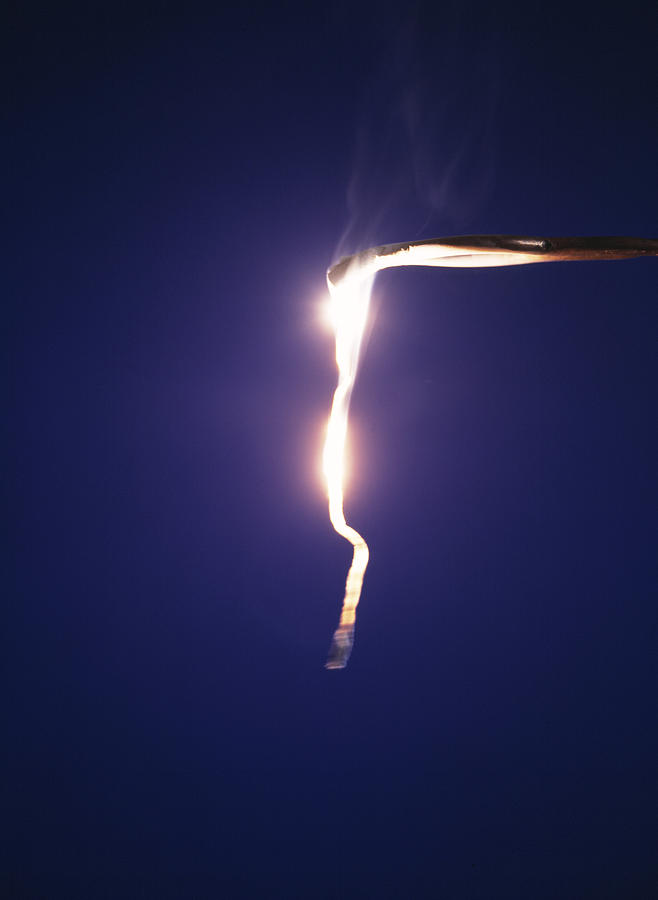
Magnesium ribbon burns with a dazzling white flame in air and forms a white powder called magnesium oxide.
Magnesium oxide forms a basic solution when mixed with water. It changes red litmus paper to blue.
Sodium
Sodium reacts very vigorously with oxygen and water and produces a lot of heat. Therefore, sodium is stored in kerosene to prevent contact with air and moisture.
4.4 Substances that Behave Differently from Metals in Air and Water
Sulfur
Sulfur is a non-metal. When sulfur burns in air, sulfur dioxide gas is formed. When sulfur dioxide dissolves in water, sulfurous acid is formed. Therefore, the resulting solution is acidic.
Sulfur dioxide + Water → Sulfurous acid
Activity 4.8: Let us explore
Properties of Non-metals
Most non-metals are non-lustrous.
Many non-metals are soft.
They generally cannot be beaten into sheets.
They generally cannot be drawn into wires.
They generally do not produce a ringing sound.
They generally conduct heat and electricity poorly.
Their oxides are generally acidic.
Generally, non-metals do not react with water.
Elements
Metals and non-metals are sub-categories of elements. There are presently 118 known elements. They are the basic building blocks of all matter.
4.5 Are Non-metals Essential in Everyday Life?
Non-metals are very important in everyday life.
- Oxygen: Needed for respiration and survival.
- Carbon: A building block of life and present in proteins, fats and carbohydrates.
- Nitrogen: Used in fertilisers and important for plant growth.
- Chlorine: Used in water purification.
- Iodine: Used as an antiseptic on wounds.
Science and Society
Metals and alloys are important for utensils, tools, modern technology and industries. Special metals are also used in areas such as atomic energy and aerospace.
Recycling metals such as iron and aluminium helps minimise waste and supports sustainability.
In a Nutshell – Quick Revision
- Metals and non-metals are differentiated based on their properties.
- Generally, metals are lustrous, whereas most non-metals are non-lustrous.
- Metals are generally malleable and ductile, while non-metals do not have these properties.
- Metals are good conductors of heat and electricity, but non-metals are generally poor conductors.
- Metals react with oxygen to produce metal oxides which are basic in nature.
- Non-metals react with oxygen to produce oxides which are acidic in nature.
- Generally, non-metals do not react with water.
- Metal objects get damaged when exposed to moist air, and the process is known as corrosion.
- Metals and non-metals have wide applications in everyday life.
Let Us Enhance Our Learning – Complete Book Solutions
Reason: Aluminium is malleable and can be made into thin sheets easily.
Reason: Sodium reacts very vigorously with water and produces heat.
(i) Aluminium and copper are examples of non-metals used for making utensils and statues. [ ]
(ii) Metals form oxides when combined with oxygen, the solution of which turns blue litmus paper to red. [ ]
(iii) Oxygen is a non-metal essential for respiration. [ ]
(iv) Copper vessels are used for boiling water because they are good conductors of electricity. [ ]
Aluminium and copper are metals, not non-metals.
(ii) False [F]
Metal oxides are generally basic. Their solutions generally turn red litmus blue.
(iii) True [T]
Oxygen is a non-metal and is essential for respiration.
(iv) False [F]
Copper vessels are useful for boiling water mainly because copper is a good conductor of heat, not because it conducts electricity.
| Column I | Column II |
|---|---|
| (i) Used in electrical wiring | (a) E N X Y G O |
| (ii) Most malleable and ductile | (b) N E C O H I R L |
| (iii) Living organisms cannot survive without it. | (c) P E P O R C |
| (iv) Plants grow healthy when fertilisers containing it are added to the soil. | (d) T E N G O I N R |
| (v) Used in water purification | (e) O G D L |
(i) Used in electrical wiring → (c) COPPER
(ii) Most malleable and ductile → (e) GOLD
(iii) Living organisms cannot survive without it. → (a) OXYGEN
(iv) Plants grow healthy when fertilisers containing it are added to the soil. → (d) NITROGEN
(v) Used in water purification → (b) CHLORINE
When sulfur reacts with oxygen, it forms sulfur dioxide. Sulfur dioxide dissolves in water to form sulfurous acid, so its oxide is acidic in nature.
Main difference: Magnesium oxide is basic, whereas sulfur dioxide is acidic.
No change
Changes to blue
Iron copper sulfur coal plastic wood cardboard
The nail in water can rust, while vinegar can make corrosion occur more quickly.
Metals are generally strong, malleable, ductile and good conductors, so they are used for wires, cooking vessels, tools, machines, jewellery and many other products.
Non-metals have different properties and are also useful. Oxygen is needed for respiration, nitrogen is used in fertilisers, chlorine is used for water purification and iodine is used as an antiseptic.
Important Comparison: Metals and Non-metals
| Property | Metals | Non-metals |
|---|---|---|
| Appearance | Generally lustrous | Generally non-lustrous |
| Hardness | Generally hard | Usually soft |
| Malleability | Generally malleable | Generally not malleable |
| Ductility | Generally ductile | Generally not ductile |
| Sonority | Generally sonorous | Generally not sonorous |
| Heat conduction | Good conductors | Generally poor conductors |
| Electricity conduction | Good conductors | Generally poor conductors |
| Oxides | Generally basic | Generally acidic |
| Reaction with water | Some metals react with water | Generally do not react with water |
Important Terms to Remember
Metallic lustre: The shiny appearance shown by metals.
Malleability: Ability to be beaten into thin sheets.
Ductility: Ability to be drawn into wires.
Sonority: Ability to produce a ringing sound.
Conduction: Transfer of heat from one point to another.
Good conductor: A material that allows heat or electricity to pass through easily.
Poor conductor: A material that does not allow heat or electricity to pass through easily.
Rust: Brown deposit formed on iron in the presence of air and water.
Rusting: Formation of rust on iron.
Corrosion: Gradual deterioration of a metal surface due to air, water or other substances.
Galvanisation: Protecting iron by applying a coating of zinc.
Element: A substance that cannot be broken down into simpler substances.
Exploratory Projects
One-Minute Revision
- Metals are generally shiny, hard, malleable and ductile.
- Metals generally produce a ringing sound.
- Metals are generally good conductors of heat and electricity.
- Malleability means ability to form thin sheets.
- Ductility means ability to form wires.
- Sonority means production of a ringing sound.
- Iron rusts when both air and water are present.
- Rust is a brown deposit on iron.
- Painting, oiling, greasing and galvanisation can help prevent rusting.
- Magnesium oxide is basic.
- Sulfur dioxide forms an acidic solution with water.
- Non-metals are also essential in everyday life.
- Oxygen is needed for respiration.
- Nitrogen is important for plant growth and fertilisers.
- Chlorine is used in water purification.
- Iodine can be used as an antiseptic.
Prepare for your exams with this easy and student-friendly Class 7 Science Chapter 4 worksheet. Practice the questions carefully to revise important concepts, strengthen your understanding, and improve your Science skills.
Class 7 Science Chapter 4 Worksheet
Practice worksheet for Class 7 Science Chapter 4 with important questions, extra practice and answer key.
Start WorksheetClass 7 Science Chapter 4 NotesClass 7 Science Chapter 4 SolutionsThe World of Metals and Non-metals Class 7 NotesThe World of Metals and Non-metals Class 7 SolutionsClass 7 Science Curiosity NotesClass 7 Science Curiosity Chapter 4 SolutionsNCERT Class 7 Science Chapter 4 SolutionsClass 7 Science Book SolutionsClass 7 Science Chapter 4 Question AnswersClass 7 Curiosity Science Notes