Class 6 Science Chapter 11 Nature’s Treasures – easy notes, concepts, NCERT book solutions, important questions, worksheet and answers. Learn about natural resources, air, water, soil, forests, their importance and the need to conserve nature in simple and easy language.
Class 6 Science
Chapter 11 — Nature’s Treasures
Notes, Concepts and NCERT Book Solutions
🌿 Chapter Overview
🌬️ Air
Air contains oxygen needed by living beings. Moving air is called wind.
💧 Water
Water is needed for drinking, cooking, cleaning, farming and many other activities.
☀️ Sun
The Sun is the main source of energy on Earth.
🌳 Forests
Forests provide food and shelter to many living beings and help protect soil.
🪨 Soil, Rocks and Minerals
Soil supports plants. Rocks and minerals are useful in many human activities.
⛽ Fossil Fuels
Coal, petroleum and natural gas are fossil fuels and are non-renewable resources.
🌬️ 11.1 Air
Composition of Air

Composition of air: Nitrogen 78%, Oxygen 21%, Argon, carbon dioxide and other gases 1%.
| Gas | Percentage |
|---|---|
| Nitrogen | 78% |
| Oxygen | 21% |
| Argon, carbon dioxide and other gases | 1% |
🌪️ Wind
A firki rotates when air or wind pushes its blades.
🌬️ Windmills
Windmills use the energy of wind. They can be used to run flour mills, pull up water from a well and generate electricity.
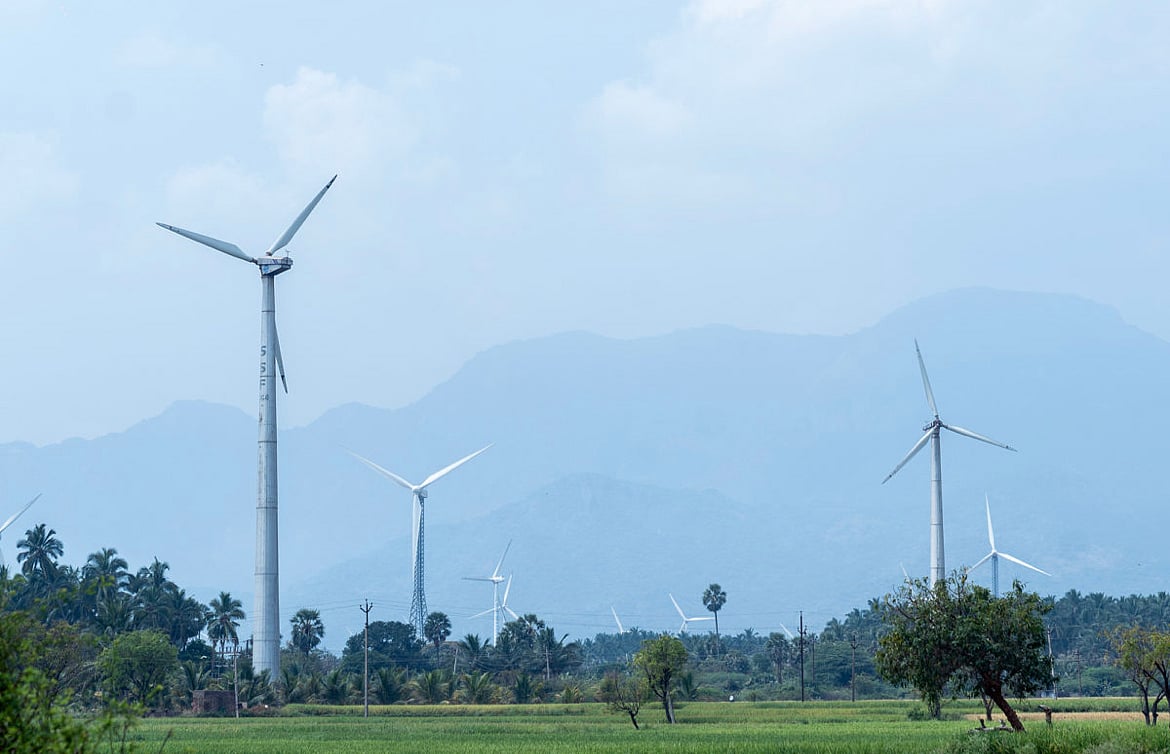
A wind farm uses many wind turbines to use wind energy.
Activity 11.1 — Let us experience
Activity 11.2 — Firki
💧 11.2 Water
Uses of Water
- Drinking
- Cooking
- Bathing
- Washing
- Cleaning
- Growing crops
- Gardening
- Industrial purposes
Freshwater and Saline Water
Freshwater is found in ice sheets and snow, rivers, lakes, ponds, wells and underground water. Only a small fraction of freshwater is easily accessible.
💦 Saving Water
Do not leave taps running when water is not needed.
Repair leaking taps and pipes quickly.
Reuse suitable water instead of throwing it away.
Collect and store rainwater for later use.
🌧️ Rainwater Harvesting

Traditional stepwells are examples of water-harvesting practices.
Stepwells such as Bawadi in Rajasthan and Vav in Gujarat are examples of traditional water-harvesting structures.
Water Pollution
Water gets polluted when waste from homes, industries and other activities is dumped into water sources. Polluted water may not be fit for consumption.
Activity 11.3 — Wastage of Water
| Activity | How is water wasted? | Ways to reduce wastage |
|---|---|---|
| Hand washing | Leaving the tap running. | Turn off the tap when not needed. |
| Washing clothes | Using more water than required. | Use only the required amount. |
| Washing utensils | Keeping the tap running. | Use water carefully. |
| Taking shower | Using water for too long. | Take shorter showers. |
| Cooking | Using more water than needed. | Measure and use water carefully. |
| Gardening | Overwatering plants. | Water plants only when needed. |
| Brushing teeth | Leaving the tap running. | Close the tap while brushing. |
☀️ 11.3 Energy from the Sun
🌱 Plants
Plants use sunlight to prepare food.
👕 Drying
Heat from the Sun helps dry clothes and food.
☀️ Solar Panels
Solar panels convert sunlight into electrical energy.
🍳 Solar Cooker
Solar energy can be used for cooking.

Solar panels and solar water heating systems use energy from the Sun.
☀️ Uses of Solar Energy
- Drying clothes and food
- Helping plants prepare food
- Generating electricity through solar panels
- Cooking using solar cookers
- Heating water using solar water heaters
🌳 11.4 Forests
Products and Benefits of Forests
- Fruits
- Wood
- Medicinal plants
- Food for animals
- Shelter for wildlife
- Protection of soil
- Support for biodiversity
🌱 Why Should We Protect Forests?
Large-scale cutting of trees reduces forest cover. It can destroy habitats, reduce biodiversity and affect soil. Forests take many years to regenerate. Therefore, forests must be used responsibly.
🌳 Van Mahotsav
Van Mahotsav is a week-long event celebrated during July. Trees and plants are planted and awareness about forests is increased.
🌲 Chipko Movement

An image associated with the Chipko movement and tree protection.
🪨 11.5 Soil, Rocks and Minerals
🌱 Soil
Earthworms help turn and loosen the soil. The spaces between soil particles provide air and allow roots to grow.
How is Soil Formed?
🪨 Rocks
Rocks are used to construct houses, buildings, temples, roads, dams and table tops. Some rocks are also used for roofing and building materials.
Examples include granite, sandstone, marble, slate and laterite.
💎 Minerals
Minerals are used to make airplanes, cars, jewellery, cosmetics, electrical and electronic equipment.
Activity 11.4 — Let us investigate
Collect soil samples from different places. Observe their colour and texture. Use a magnifying lens if available and compare what you see with your naked eye.
| Location | What I guessed | Naked-eye observation | Magnifying-lens observation |
|---|---|---|---|
| Soil from a farm after ploughing | ________________ | ________________ | ________________ |
| Soil from another place | ________________ | ________________ | ________________ |
⛽ 11.6 Fossil Fuels
| Fossil Fuel | Uses |
|---|---|
| Petroleum | Used to obtain petrol, diesel and kerosene. |
| Natural gas | Used for cooking, electricity generation and as CNG for vehicles. |
| Coal | Mainly used for producing electricity. |
Activity 11.5 — Let us conduct a survey
Conduct a survey of vehicles in your neighbourhood. Find the types of vehicles and the fuels they use.
| Type of vehicle | Type of fuel used |
|---|---|
| ________________ | ________________ |
| ________________ | ________________ |
| ________________ | ________________ |
| ________________ | ________________ |
Ways to Save Fossil Fuels
- Walk to nearby places.
- Use a bicycle when possible.
- Use public transport.
- Share vehicles when possible.
- Use cleaner alternatives where suitable.
♻️ 11.7 Natural Resources: Renewable and Non-renewable
Renewable Resources
Examples: Air, water and forests.
Non-renewable Resources
Examples: Minerals, soil, rocks, coal, petroleum and natural gas.
Air, Water, Forest
Coal, Petroleum, Natural Gas, Minerals, Rocks, Soil
🌍 11.8 Resources We Use
Activity 11.6 — Natural Resources Used
| Activity | Natural Resource |
|---|---|
| Washing clothes | Water |
| Making clay toys | Soil / Clay |
| Collecting firewood | Forest / Trees |
| Making kites | Paper, wood and other natural materials |
| Having breakfast | Food from plants and animals, water |
Use natural resources carefully today so that they are available for future generations too.
“Earth provides enough to satisfy every man’s need but not for every man’s greed.”
– M. K. Gandhi
📚 Quick Revision Summary
• Resources required for survival are provided by nature.
• Resources provided by nature are called natural resources.
• Air, water, sunlight, forests, soil, rocks, minerals and fossil fuels are important natural resources.
• Resources created by humans are called human-made resources.
• Renewable resources are renewed or restored naturally within a reasonable period.
• Non-renewable resources are limited and are not replenished within a reasonable period.
• Fossil fuels include coal, petroleum and natural gas.
• All living beings depend on natural resources.
• Natural resources should be used judiciously.
🔑 Keywords
📝 Let Us Enhance Our Learning — Book Solutions
| Jumbled name | Correct name | Type |
|---|---|---|
| ocrk | Rock | Non-renewable |
| refost | Forest | Renewable |
| ndiw | Wind | Renewable |
| atwre | Water | Renewable |
(i) Nature has all the resources to meet human needs. [ ]
(ii) Machines are a resource found in nature. [ ]
(iii) Natural gas is a non-renewable resource. [ ]
(iv) Air is a renewable resource. [ ]
(i) True [T]
(ii) False [F]
Correction: Machines are human-made resources.
(iii) True [T]
(iv) True [T]
(i) A fuel that is commonly used in two wheelers like scooters or bikes is………
(a) Kerosene
(b) Petrol
(c) Diesel
(d) LPG
(ii) An example of a renewable resource is ………………
(a) Coal
(b) Water
(c) Natural gas
(d) Petrol
(i) (b) Petrol
Petrol is commonly used as a fuel in scooters and bikes.
(ii) (b) Water
Water is a renewable natural resource.
| Renewable Resources | Non-renewable Resources |
|---|---|
| Forests | Coal |
| Natural gas | |
| Minerals |
Petroleum takes millions of years to form. It is available in limited quantities and cannot be replaced quickly after it is used. Therefore, it is a non-renewable resource.
Trees take many years to grow. A forest is not only trees; it also includes soil, plants, animals and many other living beings. Therefore, restoring a large forest takes a long time.
| Daily activity | Natural resource | How to reduce use |
|---|---|---|
| Bathing | Water | Use only the required water. |
| Brushing teeth | Water | Turn off the tap. |
| Cooking | Water, fuel | Use water and fuel carefully. |
| Travelling | Fossil fuels | Walk, cycle or use public transport when possible. |
| Eating food | Plants and animals | Avoid wasting food. |
1. Breathing
2. Flying of birds
3. Drying of clothes
4. Sailing boats using wind
• Plant trees and native plants.
• Take care of newly planted trees.
• Avoid unnecessary cutting of trees.
• Encourage people to plant and protect trees.
• Participate in tree-plantation drives.
• Keep green areas clean.
Answer the following questions—
(i) What type of energy is being used for cooking?
(ii) Name one benefit and one drawback of using this type of energy for cooking.
(i) Energy from fuel, such as LPG or natural gas, is being used for cooking.
(ii)
Benefit: It provides heat quickly and makes cooking easy.
Drawback: Burning fuel can produce smoke and gases that pollute the air.
Tree roots hold the soil together. When many trees are cut, the soil becomes loose and can be washed away by rain or blown away by wind. This causes soil erosion and reduces soil quality.
1. Smoke from vehicles pollutes the air.
2. Burning fossil fuels and waste releases smoke and harmful gases.
Action: Use public transport, walk or cycle for nearby journeys and use cleaner sources of energy whenever possible.
The solar panels would not receive sunlight and would produce much less or no electricity during that period. The gas stove could still be used for cooking. The windmill could still pump water if sufficient wind were available.
Air
Water
Forest
Fossil fuels
Coal
Petroleum
Natural gas
Brief Report: Protection of Trees
Trees are useful for wood, paper, furniture and construction. However, cutting trees on a large scale is harmful to nature.
Forests provide food and shelter to animals, protect soil and support many living beings. Large-scale cutting of trees can cause soil erosion, loss of habitats and reduction of green cover.
Therefore, trees should not be cut unnecessarily. We should use wood carefully, recycle paper and wood products, plant new trees and protect existing forests.
School Water-Saving Plan
- Repair leaking taps and pipes.
- Put reminders near taps to turn them off.
- Use water carefully while cleaning and gardening.
- Reuse suitable water for watering plants.
- Collect rainwater through rainwater harvesting.
- Create a student water-monitoring team.
- Teach students about saving water.
How it helps: It saves freshwater, reduces wastage and helps protect water for people, plants and animals in the future.
🔍 Learning Further
Stepwells or Bawadis, Vavs, tanks, ponds and rooftop rainwater harvesting systems are examples of water-harvesting practices in India.
Common sources may include vehicle smoke, burning waste and smoke from other fuel-burning activities.
Two practical steps:
1. Encourage walking, cycling and public transport for nearby journeys.
2. Do not burn waste and plant more trees around the school and community.
| Mineral/Rock | Use |
|---|---|
| Iron | Machines, tools and construction. |
| Aluminium | Vehicles, utensils and many useful products. |
| Granite | Buildings, floors and table tops. |
| Marble | Floors, buildings and decoration. |
| Slate | Roofing and other construction uses. |
- Take permission from the school authorities.
- Select a suitable place for planting.
- Choose suitable local tree species.
- Arrange saplings, tools, soil and water.
- Divide students into small groups.
- Plant the saplings carefully.
- Label the planted trees.
- Make a watering and care schedule.
- Record the names of the trees planted.
- Continue caring for the plants after the plantation drive.
Sample One-Page Report
Title: Tree Plantation Drive in Our School
Our school organised a tree plantation drive with the help of teachers and students. We planted suitable trees in the school campus and watered them carefully. Students were also taught about the importance of trees and forests.
| Tree | Importance |
|---|---|
| Neem | Provides shade and supports biodiversity. |
| Peepal | Provides shelter and shade for living beings. |
| Amaltas | Provides flowers and adds greenery. |
| Fruit tree | Provides fruits and food for living beings. |
Conclusion: We should plant, protect and care for trees to increase the green cover of our surroundings.
⭐ Important Facts to Remember
78% nitrogen, 21% oxygen and 1% other gases.
Moving air is called wind.
The Sun is the main source of energy on Earth.
Provide food, shelter and protection for many living beings.
Coal, petroleum and natural gas.
Air, water and forests.
Coal, petroleum, natural gas, minerals, rocks and soil.
Use water carefully, prevent pollution and harvest rainwater.
🌟 One-Minute Revision
Air → Essential for life; moving air is wind.
Water → Essential and precious; conserve it.
Sun → Main source of energy on Earth.
Forests → Provide food, shelter and protect soil.
Soil → Supports plant growth and takes a long time to form.
Rocks → Used in construction and many other activities.
Minerals → Used to obtain useful metals and make many products.
Fossil fuels → Coal, petroleum and natural gas.
Renewable → Resources that are naturally renewed within a reasonable period.
Non-renewable → Limited resources that take a very long time to form.
Conservation → Use nature’s resources carefully and avoid wastage.
🌱 Protect Nature Today — Save Resources for Tomorrow 🌍
Practice Class 6 Science Chapter 11 Looking for extra practice? Use the worksheet below to revise Chapter 11 with easy questions, extra practice questions and revision exercises.
Download Class 6 Science Chapter 11 WorksheetClass 6 Science Chapter 11, Nature’s Treasures, Class 6 Science notes, Class 6 Science solutions, NCERT Class 6 Science Chapter 11, Class 6 Science worksheet, natural resources, air, water, soil, forests, conservation of nature, Class 6 Science questions and answers.