Class 9 Science — Chapter 8
Journey Inside the Atom
Short Concept Notes and NCERT Book Solutions
Part 1: Short Concept Notes
1. What Is an Atom?
An atom is a tiny building block of matter. Atoms contain three main subatomic particles:
- Proton: Positive charge (+1), found in the nucleus.
- Neutron: No charge (0), found in the nucleus.
- Electron: Negative charge (−1), found around the nucleus.
Almost all the mass of an atom is concentrated in its nucleus. Most of the atom is empty space.
2. Early Ideas About Atoms
- Acharya Kanada: Suggested that matter is made of tiny particles called parmanus.
- Leucippus and Democritus: Proposed indivisible particles called atomos.
- John Dalton (1808): Developed an atomic theory based on scientific evidence and described atoms as indivisible particles.
Later experiments showed that atoms contain smaller particles.
3. Development of Atomic Models
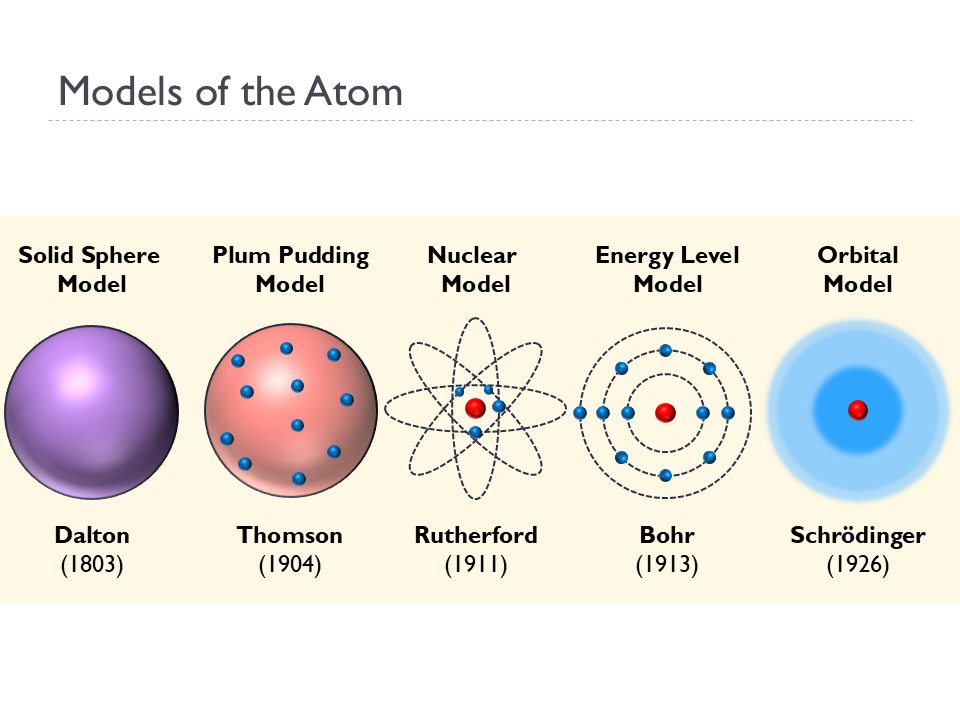
| Scientist | Model and main idea | Limitation |
|---|---|---|
| John Dalton | Atom is an indivisible particle. | Could not explain subatomic particles. |
| J. J. Thomson | Electrons are embedded in a positively charged sphere. | Could not explain the gold foil experiment. |
| Ernest Rutherford | A tiny, positive nucleus is surrounded by electrons; most of the atom is empty space. | Could not explain atomic stability. |
| Niels Bohr | Electrons occupy fixed energy levels or shells. | Does not fully explain all atoms. |
| James Chadwick | Discovered the neutron in 1932. | His discovery added a missing particle to the atomic picture. |
4. Discovery of the Electron
In 1897, J. J. Thomson studied cathode rays and discovered negatively charged particles called electrons.Since electrons are present in atoms of different elements, atoms are divisible and contain smaller particles.
Thomson’s model: The atom was pictured as a positively charged sphere with negative electrons embedded in it, like seeds in a watermelon or plums in a pudding.
5. Rutherford’s Gold Foil Experiment
Rutherford and his team directed positively charged alpha particles at a thin gold foil.
- Most particles passed straight through: most of the atom is empty space.
- Some particles were deflected: positive charge is concentrated in a small region.
- A very few bounced back: the nucleus is extremely small, dense and contains most of the atom’s mass.
Conclusion: Rutherford proposed the nuclear or planetary model of the atom.
6. Limitation of Rutherford’s Model
Rutherford’s model could not explain why atoms remain stable.A moving electron should lose energy according to the classical explanation and spiral towards the nucleus. Since real atoms are stable, another model was needed.
7. Bohr’s Model of the Atom
Niels Bohr proposed his model in 1913.- Electrons occupy fixed energy levels called shells.
- Shells are named K, L, M, N, and so on.
- They can also be numbered as n = 1, 2, 3, 4, and so on.
- Electrons do not lose energy while remaining in an allowed shell.
- Electrons absorb or release a fixed amount of energy when moving between energy levels.
The K-shell is closest to the nucleus and has the lowest energy.
8. Protons and Neutrons
- Proton: Positive charge, relative charge +1.
- Neutron: No electric charge, relative charge 0.
- Electron: Negative charge, relative charge −1.
Protons and neutrons are present in the nucleus. They are called nucleons.
James Chadwick discovered the neutron in 1932. Neutrons contribute to atomic mass and help the nucleus remain bound.
| Particle | Symbol | Relative charge |
|---|---|---|
| Electron | e⁻ | −1 |
| Proton | p⁺ | +1 |
| Neutron | n⁰ | 0 |
9. Symbols of Elements
Chemical symbols are internationally recognised abbreviations for elements.- The first letter is always capital: H, C, O.
- If there is a second letter, it is lowercase: He, Al, Cl.
- Some symbols come from Latin or other historical names.
| Element | Symbol | Element | Symbol |
|---|---|---|---|
| Hydrogen | H | Oxygen | O |
| Carbon | C | Nitrogen | N |
| Sodium | Na | Potassium | K |
| Iron | Fe | Copper | Cu |
| Calcium | Ca | Magnesium | Mg |
| Chlorine | Cl | Aluminium | Al |
| Silver | Ag | Gold | Au |
| Zinc | Zn | Lead | Pb |
10. Atomic Number and Mass Number
Atomic number (Z): Number of protons in the nucleus.
For a neutral atom:
Mass number (A): Total number of protons and neutrons.
Example: Sodium-23 has 11 protons, 11 electrons and 12 neutrons.
Atomic notation is written as AZX, where X is the element symbol, A is the mass number and Z is the atomic number.
11. Electronic Configuration
Electrons occupy shells around the nucleus.- Maximum capacity of a shell = 2n².
- K-shell: maximum 2 electrons.
- L-shell: maximum 8 electrons.
- M-shell: maximum 18 electrons by the 2n² rule.
- For the first 18 elements, electrons are arranged as 2, 8, and then up to 8 in the third shell.
| Element | Atomic number | Electronic configuration |
|---|---|---|
| Hydrogen | 1 | 1 |
| Helium | 2 | 2 |
| Carbon | 6 | 2, 4 |
| Oxygen | 8 | 2, 6 |
| Sodium | 11 | 2, 8, 1 |
| Magnesium | 12 | 2, 8, 2 |
| Chlorine | 17 | 2, 8, 7 |
| Argon | 18 | 2, 8, 8 |
12. Valence Electrons and Valency
- Valence shell: The outermost occupied shell.
- Valence electrons: Electrons in the outermost shell.
- Valency: Combining capacity of an atom; it is generally related to the electrons lost, gained or shared to reach a stable configuration.
| Element | Configuration | Valence electrons | Common valency |
|---|---|---|---|
| Sodium | 2, 8, 1 | 1 | 1 |
| Magnesium | 2, 8, 2 | 2 | 2 |
| Carbon | 2, 4 | 4 | 4 |
| Oxygen | 2, 6 | 6 | 2 |
| Chlorine | 2, 8, 7 | 7 | 1 |
| Neon | 2, 8 | 8 | 0 |
Atoms with complete outer shells are generally stable and less reactive.
13. Isotopes
Isotopes are atoms of the same element that have the same atomic number but different mass numbers.- They have the same number of protons.
- Neutral isotopes have the same number of electrons.
- They have different numbers of neutrons.
- Their chemical properties are generally similar.
Examples: Hydrogen-1, hydrogen-2 and hydrogen-3; carbon-12, carbon-13 and carbon-14.
Uses: Uranium-235 in nuclear fuel, cobalt-60 in some cancer treatments, iodine-131 in thyroid treatment, and carbon-14 for dating ancient organic materials.
14. Average Atomic Mass
The average atomic mass takes into account the masses of naturally occurring isotopes and their relative abundances.For chlorine-35 (75%) and chlorine-37 (25%):
The result is a weighted average. It does not mean that each chlorine atom has a mass of 35.5 u.
15. Isobars and the Modern Atomic Model
Isobars: Atoms of different elements with the same mass number but different atomic numbers.
Example: calcium-40, potassium-40 and argon-40.
In the modern quantum mechanical model, electrons are described by regions of probability called orbitals or electron clouds, rather than exact circular paths.
Quick Revision Formulas
- Atomic number = Number of protons.
- Neutral atom: electrons = protons.
- Mass number = Protons + Neutrons.
- Neutrons = Mass number − Atomic number.
- Maximum shell capacity = 2n².
- Isotopes: same atomic number, different mass numbers.
- Isobars: same mass number, different atomic numbers.
- Valency is the combining capacity of an atom.
Part 2: NCERT Book Solutions
Answers are given in the same order as the supplied chapter. The original end-of-chapter questions and options are retained.
Pause and Ponder — Section 8.2.1
(i) the positive charge on the clay is lesser than the total negative charge of the beads?
(ii) by mistake, the clay itself carries a bit of negative charge? Would your model still represent a neutral atom?
(i) The model would have a net negative charge because the negative charge would be greater than the positive charge.
(ii) No. The clay would add negative charge instead of positive charge, so the model would not represent a neutral atom.
Think as a Scientist — Gold Foil Experiment
Reason (R): According to Thomson’s model, electrons are embedded in a uniformly distributed positive charge sphere.
Choose the correct option:
(i) Both A and R are true, and R is the correct explanation of A.
(ii) Both A and R are true, but R is not the correct explanation of A.
(iii) A is true, but R is false.
(iv) A is false, but R is true.
Both statements are true. However, the reason describes Thomson’s model and does not explain Rutherford’s conclusion about the nucleus.
Pause and Ponder — Section 8.4
Pause and Ponder — Atomic Number and Mass Number
- Protons = 26
- Electrons = 26, for a neutral atom
- Neutrons = 56 − 26 = 30
Pause and Ponder — Electronic Configuration
(i) ¹²₆ C
(ii) ¹⁹₉ F
(iii) ²⁸₁₄ Si
- (i) Carbon: 2, 4 — 4 electrons.
- (ii) Fluorine: 2, 7 — 7 electrons.
- (iii) Silicon: 2, 8, 4 — 4 electrons.
- Atomic number 12 (magnesium): 2, 8, 2.
- Atomic number 16 (sulfur): 2, 8, 6.
- Atomic number 18 (argon): 2, 8, 8.
My riddle: I have 12 protons, 12 electrons and 12 neutrons. My electronic configuration is 2, 8, 2. Who am I?
Answer: Magnesium.
Pause and Ponder — Isotopes
- Both atomic numbers = 11.
- First mass number = 11 + 12 = 23.
- Second mass number = 11 + 13 = 24.
Revise, Reflect, Refine — End-of-Chapter Questions
(i) The experiment clearly showed the existence of neutrons in the nucleus.
(ii) The results disproved the plum pudding model and led to the idea of a nucleus at the centre of the atom.
(iii) The large deflection of a few alpha particles indicated that most of the mass of the atom and positive charge are packed into a tiny centre.
(iv) The way alpha particles were deflected showed that electrons move around the nucleus.
- (i) Incorrect: The experiment did not establish the existence of neutrons.
- (ii) Correct: The observations showed that Thomson’s model was inadequate and supported a central nucleus.
- (iii) Correct: Large deflections showed that positive charge and most of the mass are concentrated in a tiny, dense region.
- (iv) Incorrect: The experiment did not establish the paths of electrons around the nucleus.
(i) Electrons lose energy while moving in fixed orbits and slowly fall into the nucleus.
(ii) Electrons can exist anywhere around the nucleus with no fixed energy.
(iii) Electrons revolve around the nucleus in orbits of fixed energy without losing energy.
(iv) Electrons can be found between energy levels as they move around the nucleus.
- (i) Incorrect: Bohr proposed that electrons do not lose energy while in an allowed orbit.
- (ii) Incorrect: Bohr’s model allows only specific energy levels.
- (iii) Correct: Electrons in allowed orbits have fixed energies and do not lose energy while remaining there.
- (iv) Incorrect: In Bohr’s model, electrons occupy allowed energy levels, not intermediate energies.
X Y Z
Number of protons 18 17 17
Number of neutrons 19 18 20
Explain the relation between the following:
(i) Y and Z
(ii) Z and X
(i) Y has 17 protons and 18 neutrons, so its mass number is 35. Z has 17 protons and 20 neutrons, so its mass number is 37. They are isotopes of the same element, chlorine.
(ii) Z has mass number 37. X has 18 protons and 19 neutrons, giving mass number 37. They have the same mass number but different atomic numbers, so they are isobars.
(i) Bohr’s model proposed that electrons move in fixed orbits around the nucleus, each with a definite energy.
(ii) Thomson’s model depicted the atom as a ʻplum puddingʼ with electrons embedded in a sphere of positive charge.
(iii) Rutherford’s model proposed that atoms have a dense central nucleus.
(iv) Dalton’s model described atoms as indivisible particles.
- Dalton: atoms were indivisible particles.
- Thomson: electrons were embedded in a positive sphere.
- Rutherford: the atom had a dense central nucleus.
- Bohr: electrons occupied fixed energy levels.
Reason (R): The number of electrons is equal to the number of protons in an atom.
Choose the correct option:
(i) Both A and R are true, and R is the correct explanation of A.
(ii) Both A and R are true, but R is not the correct explanation of A.
(iii) A is true, but R is false.
(iv) A is false, but R is true.
Both statements are true for a neutral atom. However, equal numbers of electrons and protons do not fully explain how the discovery of subatomic particles improved our understanding of atomic structure.
- (i) Protons = 12.
- (ii) Neutrons = 24 − 12 = 12.
- (iii) Electrons = 12 in a neutral atom.
Electronic configuration: 2, 8, 2.
(i) Name of the element
(ii) Symbol
(iii) Total number of electrons
(iv) Number of valence electrons
(v) Valency of the element
(vi) Number of protons
(vii) Atomic number
Answer
The electronic configurations of the four elements are: (a) 2, 1; (b) 2, 5; (c) 2, 8, 3; and (d) 2, 7.
| Information | (a) | (b) | (c) | (d) |
|---|---|---|---|---|
| Name of element | Lithium | Nitrogen | Aluminium | Fluorine |
| Symbol | Li | N | Al | F |
| Electronic configuration | 2, 1 | 2, 5 | 2, 8, 3 | 2, 7 |
| Total number of electrons | 3 | 7 | 13 | 9 |
| Number of valence electrons | 1 | 5 | 3 | 7 |
| Valency | 1 | 3 | 3 | 1 |
| Number of protons | 3 | 7 | 13 | 9 |
| Atomic number | 3 | 7 | 13 | 9 |
Easy explanation
- (a) Lithium (Li): Its configuration is 2, 1. It has 3 electrons and 1 valence electron. Its valency is 1 because it can lose 1 electron.
- (b) Nitrogen (N): Its configuration is 2, 5. It has 7 electrons and 5 valence electrons. Its valency is 3 because it needs 3 more electrons to complete its outer shell.
- (c) Aluminium (Al): Its configuration is 2, 8, 3. It has 13 electrons and 3 valence electrons. Its valency is 3 because it can lose 3 electrons.
- (d) Fluorine (F): Its configuration is 2, 7. It has 9 electrons and 7 valence electrons. Its valency is 1 because it needs 1 more electron to complete its outer shell.
Remember: In a neutral atom, the number of electrons, protons and the atomic number are equal. Valence electrons are the electrons in the outermost shell.
- (i) Neutrons = 197 − 79 = 118.
- (ii) Electrons = 79 in a neutral atom.
Table 8.5
Atomic number
Mass number
Number of neutrons
Number of protons
Number of electrons
Name of the elements
5 – 6 – – –
– 14 – – 7 Nitrogen
– 24 – 12 – –
15 – 16 – – –
– 1 0 – – –
| Atomic number | Mass number | Neutrons | Protons | Electrons | Element |
|---|---|---|---|---|---|
| 5 | 11 | 6 | 5 | 5 | Boron |
| 7 | 14 | 7 | 7 | 7 | Nitrogen |
| 12 | 24 | 12 | 12 | 12 | Magnesium |
| 15 | 31 | 16 | 15 | 15 | Phosphorus |
| 1 | 1 | 0 | 1 | 1 | Hydrogen |
(i) How many electrons and protons does element X have?
(ii) What is its atomic number?
(iii) Identify the element X.
(iv) Write its electronic configuration.
(v) How many valence electrons does it have?
(vi) What will be the mass number if two neutrons are added to its nucleus?
(vii) What will be the relation of X with the new atom?
Protons = 35 − 18 = 17.
- (i) Protons = 17; electrons = 17 for a neutral atom.
- (ii) Atomic number = 17.
- (iii) Element X is chlorine (Cl).
- (iv) Electronic configuration = 2, 8, 7.
- (v) Valence electrons = 7.
- (vi) New mass number = 35 + 2 = 37.
- (vii) The new atom is an isotope of chlorine. Both atoms have the same atomic number but different mass numbers.
(i) Atomic number
(ii) Atomic mass
(iii) Mass number
(iv) Overall charge
- (i) Atomic number: Remains 12 because the number of protons does not change.
- (ii) Atomic mass: Increases because the replacement particles are much heavier than electrons.
- (iii) Mass number: Remains 24 because mass number counts only protons and neutrons in the nucleus.
- (iv) Overall charge: Remains zero if there are 12 replacement particles, each with the same negative charge as an electron.
Final Revision
- Dalton described atoms as indivisible particles.
- Thomson discovered electrons and proposed the plum pudding model.
- Rutherford identified the nucleus through alpha-particle scattering.
- Bohr proposed fixed electron energy levels.
- Chadwick discovered the neutron.
- Atomic number identifies an element.
- Mass number is the sum of protons and neutrons.
- Isotopes have the same atomic number but different mass numbers.
- Isobars have the same mass number but different atomic numbers.
- Valency describes an atom’s combining capacity.