Class 9 Science — Chapter 7
Work, Energy, and Simple Machines
Short Concept Notes and NCERT Book Solutions
Part 1: Short Concept Notes
W = F × s
- SI unit: joule (J).
- One joule of work is done when a force of 1 N moves an object 1 m in the direction of the force.
- Positive work: force and displacement are in the same direction.
- Negative work: force acts opposite to displacement.
- Zero work: displacement is zero, force is zero, or force is perpendicular to displacement.
- Mechanical energy: energy due to motion or position.
- Thermal energy: associated with temperature and particle motion.
- Light energy: allows us to see.
- Sound energy: carried by vibrations and sound waves.
- Electrical energy: associated with electric charges.
- Chemical energy: stored in food, fuels and other substances.
- Nuclear energy: stored in atomic nuclei.
- A stationary object has zero kinetic energy.
- For the same speed, a heavier object has more kinetic energy.
- Kinetic energy depends on the square of speed.
Gravitational potential energy
Elastic potential energy
A stretched rubber band, compressed spring or bent bow can store energy due to deformation.- As an object falls, its potential energy decreases and its kinetic energy increases.
- At the highest point of an upward throw, its instantaneous speed is zero, so its kinetic energy is zero and its gravitational potential energy is greatest.
- Friction and air resistance transfer some mechanical energy into heat and sound.

P = W/t
- SI unit: watt (W).
- 1 watt = 1 joule per second.
- Doing the same work in less time requires greater power.
- 1 horsepower is approximately 746 W.
Pulley
A pulley is a grooved wheel used with a rope. A fixed pulley changes the direction of effort but, ideally, has mechanical advantage 1.
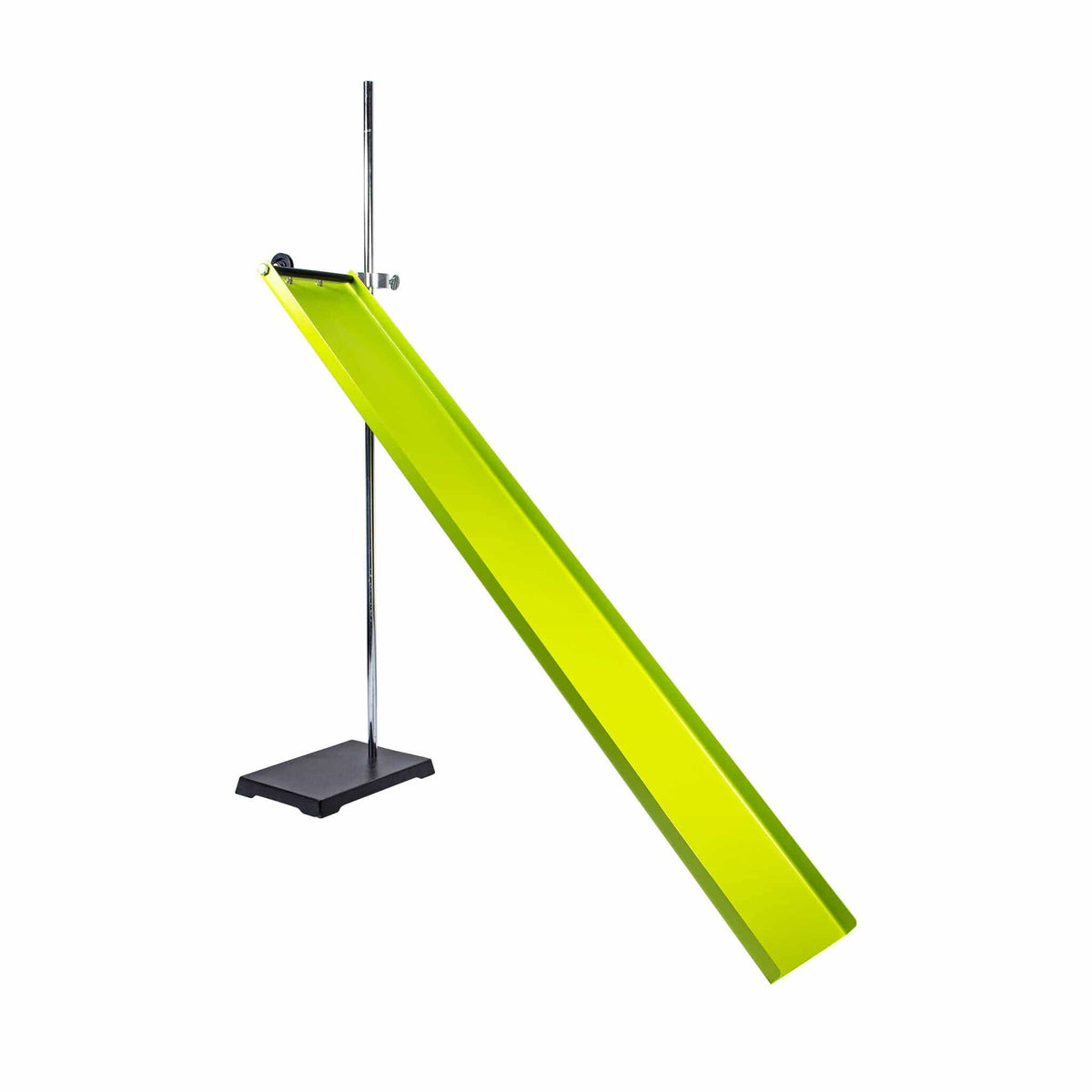
Inclined plane
A ramp helps raise a load using a smaller force over a longer distance.MA = L/h
Lever
A lever is a rigid bar that rotates about a fixed point called the fulcrum.- Fulcrum: pivot point.
- Load: force or object to be moved.
- Effort: force applied to the lever.

| Lever class | Position | Examples |
|---|---|---|
| Class I | Fulcrum between effort and load | Seesaw, scissors |
| Class II | Load between fulcrum and effort | Wheelbarrow, bottle opener |
| Class III | Effort between fulcrum and load | Tweezers, broom |
Part 2: NCERT Textbook Questions and Solutions
Answers
(i) False. Work on an object requires displacement in the direction of the force.
(ii) True. The applied force and the bucket’s displacement are both upward.
(iii) True. Both work and energy are measured in joules (J).
(iv) False. A stretched rubber band at rest has elastic potential energy, not kinetic energy.
(v) True. Energy can change from one form to another.
Answers
(i) Force × displacement.
(ii) 1 newton.
(iii) ½mv².
(iv) mgh.
(v) Rate.
Answer
Correct statements: (iii) and (iv).
At the highest point, the ball’s instantaneous velocity is zero, so its kinetic energy is zero. Its height and gravitational potential energy are maximum. Gravity still acts downward, so the force and acceleration are not zero.
Answers
(i) A truck moving uphill: Kinetic energy is converted into gravitational potential energy as the truck gains height.
(ii) Unwinding of a watch spring: Elastic potential energy is converted into mechanical energy and motion.
(iii) Photosynthesis in green leaves: Light energy is converted into chemical energy stored in food.
(iv) Water flowing from a dam: Gravitational potential energy is converted into kinetic energy.
(v) Burning of a matchstick: Chemical energy is converted into heat and light energy.
(vi) Explosion of a fire cracker: Chemical energy is converted into heat, light, sound and kinetic energy.
(vii) Speaking into a microphone: Sound energy is converted into electrical signals.
(viii) A glowing electric bulb: Electrical energy is converted into light and heat energy.
(ix) A solar panel: Light energy is converted into electrical energy.
Solution
(i) Lifted by elevator
(ii) Climbing the stairs
The student reaches the same height, so the gain is also 36,250 J.
(iii) Conclusion
Gain in gravitational potential energy depends on the change in height, not on the path taken.
Solution
Let the height of one floor be h and the first time be t.Energy required to lift to the 10th floor:
Energy required to lift to the 20th floor:
The second lift requires twice as much energy.
First power:
Second power, taking twice the time:
Answer
The energy required depends mainly on the mass of the flag, the height raised and gravitational acceleration. Ideally, the work is mgh.
Raising the flag slowly or quickly does not change the ideal work done if the same flag is raised through the same height. It changes the time taken.
Power = work ÷ time. If the same work is completed in half the time, power doubles.
Solution
Fuel energy supplied is proportional to the increase in kinetic energy.
First day: Total mass = 100 + 60 = 160 kg.
Second day: Total mass = 100 + 60 + 40 = 200 kg.
Answer
For balance, clockwise moment = anticlockwise moment.= Adult’s weight × adult’s distance
Let the child’s weight be W and the adult’s weight be 2W.
d₁ = 2d₂
The child must sit twice as far from the fulcrum as the adult.
Solution
(i) Upward motion: Gravity acts downward while the ball moves upward. Work done by gravity is negative.
Downward motion: Gravity and the ball’s motion are both downward. Work done by gravity is positive.
(ii) Work done by air resistance
= ½ × 2 × 20² = 400 J
= 2 × 10 × 19.4 = 388 J
At the highest point, the ball’s kinetic energy is zero. The loss of mechanical energy is due to air resistance.
Solution
Given: Mass = 10.0 kg; initial kinetic energy = 180 J.
(i) Speed at 0 m
(ii) Speed at 4 m
Work done is the area under the force–displacement graph.
- From 0 to 1 m: triangle area = ½ × 1 × 50 = 25 J.
- From 1 to 3 m: rectangle area = 2 × 50 = 100 J.
- From 3 to 4 m: triangle area = ½ × 1 × 50 = 25 J.
= 180 + 150 = 330 J
v = √66 ≈ 8.12 m/s
Negative acceleration: No. The force shown in the graph is in the direction of motion throughout the 0–4 m interval, so the acceleration is not negative.
Reference: Tiwari Academy — Chapter 7 solutions
Solution
For the same initial upward velocity, maximum height is inversely proportional to gravitational acceleration.Solution
(i) Between A and B, the car moves at a constant speed of 35 m/s, as shown by the horizontal part of the speed–time graph.
(ii) Kinetic energy at A
(iii) Work done by the brakes
The car comes to rest, so its final kinetic energy is zero.
= Final KE − Initial KE
(iv) The kinetic energy is mainly converted into heat due to friction in the brakes and between the tyres and road. Some energy is also converted into sound.
Reference: Learn Insta — Chapter 7 solutions
Solution
Mass of the ball = 0.5 kg. At O, velocity is zero and potential energy is 30 J. Therefore, total mechanical energy is 30 J. As the track is frictionless, total mechanical energy remains constant.
At P: Potential energy from the graph = 20 J.
At Q: Potential energy from the graph = 30 J.
At R: The potential energy shown by the graph is 10 J.
Reference: Learn Insta — Chapter 7 solutions
Solution
Given: m = 1.5 kg, h = 10 m, g = 10 m/s², resistive force = 3000 N.
(i) Velocity before impact
The coconut starts from rest, so u = 0.
(ii) Depth of depression
Potential energy lost by the coconut is used to do work against the sand’s resistive force.