Class 6 Social Science Chapter 8 Unity in Diversity, or ‘Many in the One’ from Exploring Society: India and Beyond – easy notes, concepts, NCERT book solutions, important questions and worksheet. Learn about India’s diversity, unity, cultures, languages and traditions in simple language.
Unity in Diversity, or ‘Many in the One’
Class 6 Social Science — Chapter 8
India’s Diversity, Culture and Unity
🇮🇳 What is Unity in Diversity?
India is a land of great diversity. People speak different languages, follow different religions, celebrate different festivals and have different food, clothing and traditions.
Even with these differences, people share a common identity as Indians. They live together, respect one another and participate in the life of the country.
Many different cultures + One common identity = Unity in Diversity
 Different styles of sari — Wikimedia Commons
📚 THE BIG QUESTIONS?
‘Unity in diversity’ means that people in India may have different languages, religions, cultures and traditions, but they live together as one nation. They respect their differences while sharing common values and a common national identity.
India’s diversity is especially visible in its languages, religions, festivals, food, clothing, customs and cultural practices.
We see unity in our shared national identity, common laws, democratic values, national festivals and respect for one another. People from different backgrounds live together as Indians.
🥻 The Sari — Unity and Diversity
The sari is worn by women in many parts of India, so it shows unity. However, it is made from different materials, designs and colours and is draped in different styles in different regions. For example, Maharashtra has the nauvari style, while West Bengal has the atpoure style. Silk saris of Kanchipuram and cotton saris from other regions also look different. Thus, the sari is one traditional garment with many regional forms. It beautifully shows India’s idea of unity in diversity.
The sari has been used in different ways, such as a swing or cradle, a fishing tool and a carrier for carrying things.
A sari can also be used as a temporary rope, blanket, curtain, partition, bandage or sling when necessary.
Dhoti styles vary from region to region. They may be made of cotton or other fabrics and may be worn differently in North India, Bengal, Maharashtra and South India. A dhoti may be worn during festivals, ceremonies and everyday work. It can also be folded up for easier movement.
Conclusion: Like the sari, the dhoti shows both diversity and practicality in Indian traditional clothing.
 Traditional North Indian dhoti style — Wikimedia Commons
🎉 Festivals — Different Names, Shared Celebrations
My favourite festival is Diwali. People clean and decorate their homes, light diyas, worship Goddess Lakshmi, share sweets and meet family and friends. In some parts of India it is called Deepavali. The customs and stories connected with the festival can differ from region to region.
| Festival | Regional name / form |
|---|---|
| Diwali | Deepavali |
| Durga Puja | Navratri / Dussehra |
| Bhai Dooj | Yama Dwitiya / Bhau Beej |
| Govardhan Puja | Annakut |
| Navratri | Garba celebrations in Gujarat |
These examples show that the same or related festivals can have different names, customs and styles in different regions.
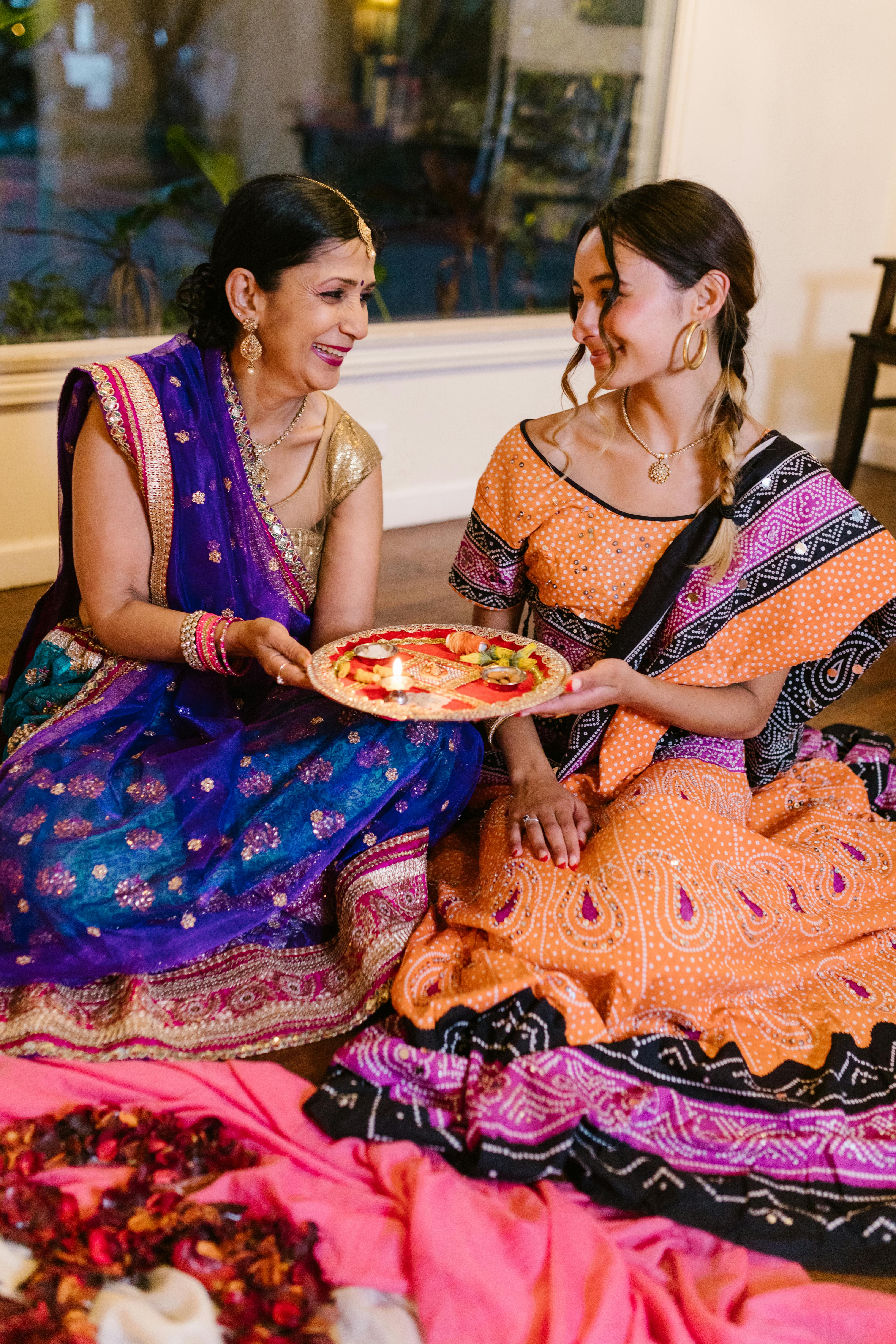 Traditional Indian festival celebration — Pexels
📖 The Ramayana and Shared Cultural Traditions
The painting depicts the abduction of Sita by Ravana from the Ramayana. Ravana takes Sita away while Rama and Lakshmana are away. Jatayu tries to stop Ravana and rescue Sita.
This episode is important because it leads to Rama’s search for Sita and the later conflict with Ravana.
 Ramayana miniature painting — Abduction of Sita by Ravana
🇮🇳 National Anthem and Unity
The National Anthem reflects India’s diversity by referring to different regions and geographical features of the country. India has many languages, cultures, communities and traditions.
At the same time, the anthem brings these different parts together as one nation. It reminds us that people from different regions share a common national identity.
Thus, the National Anthem is a good example of the idea of unity in diversity.
📚 Pañchatantra Stories
The Monkey and the Crocodile: It teaches us to use intelligence and remain calm in difficult situations.
The Tortoise and the Geese: It teaches the importance of patience and knowing when to remain silent.
The Lion and the Hare: It shows that intelligence can sometimes be more powerful than physical strength.
These lessons are still useful because we face situations in daily life where patience, intelligence and self-control help us solve problems.
Do it yourself. Choose one or two folk tales from your region and write the lesson or message they teach.
🎨 Stories Through Art
The Ramayana is an ancient story shown through many forms of art. It appears in paintings, temple sculptures, dance performances, theatre and films.
For example, Ramleela performances show important events from the Ramayana. Such art forms help people remember stories and their values.
💡 Cultural Unity and Shared Stories
“Everywhere I found a cultural background which had exerted a powerful influence on their lives. … The old epics of India, the Ramayana and the Mahabharata and other books, in popular translations and paraphrases, were widely known among the masses, and every incident and story and moral in them was engraved on the popular mind and gave a richness and content to it. Illiterate villagers would know hundreds of verses by heart and their conversation would be full of references to them or to some story with a moral, enshrined in some old classic.”
Nehru explains that stories such as the Ramayana and Mahabharata had a strong influence on people’s lives. People knew these stories even without formal education.
The stories taught values such as duty, truth, courage and righteousness. They were passed from one generation to another through oral traditions, performances and popular retellings.
This helped create a shared cultural understanding among people from different parts of India.
🌈 How Diversity Becomes Unity
| Different in India | Common Bond |
|---|---|
| Languages | Indian identity |
| Religions | Respect and coexistence |
| Food | Shared cultural exchange |
| Clothing | Indian heritage |
| Festivals | Celebration and togetherness |
| Stories and traditions | Shared cultural values |
📖 Important Terms
Unity: Being together as one.
Diversity: Variety or differences among people.
Culture: The way of life, traditions, beliefs, arts and practices of a community.
Tradition: A custom or practice passed from one generation to another.
Coexistence: Living peacefully together.
National Identity: A shared feeling of belonging to the same nation.
⚡ Quick Revision
- India has enormous cultural and regional diversity.
- People speak many languages and follow different traditions.
- India’s diversity can be seen in food, clothing, festivals, religions, languages and customs.
- The sari and dhoti show how one type of clothing can have many regional forms.
- Festivals may have different names and customs in different regions.
- The Ramayana and other traditional stories have been shared through many forms of art.
- The National Anthem represents different parts of India while bringing them together as one nation.
- Unity does not mean that everyone must be the same.
- India’s strength lies in respecting diversity while remaining united.
🎯 Exam-Ready Answer
The main idea is that India has many different languages, religions, cultures, foods, clothes, festivals and traditions, yet its people are connected by a common national identity. These differences do not have to divide people. Respect, cooperation and coexistence help different communities live together as one nation.
🌟 One-Line Summary
India is diverse in many ways, but its people are united by a shared identity, common values and a spirit of coexistence.
This worksheet for Chapter 6 s designed for easy practice and revision. It includes important questions and activities based on the textbook. Students can use it to check their understanding, strengthen their concepts and prepare for exams.
Class 6 Social Science Chapter 8, Unity in Diversity, Many in the One, Exploring Society India and Beyond, Class 6 Social Science notes, Class 6 Social Science solutions, NCERT Class 6 Social Science, Class 6 SST Chapter 8, Unity in Diversity questions and answers, Class 6 Social Science worksheet, Indian diversity, Indian culture, unity in diversity, languages and traditions.