Class 6 Khel Yatra Unit 5 Chapter 4 Prānāyāma – easy notes, concepts, yogic practices, questions and answers, and worksheet. Learn about prānāyāma, breathing practices and their role in yoga and well-being in simple language.
Class 6 Khel Yatra
Chapter 4 – Prānāyāma
Pages: 157–163 and Pratyāhāra section
Prānāyāma teaches us to become aware of our breath and practise breathing in a calm and controlled way.
1. What is Prānāyāma?
Page 157One of the most important signs of life is our breath. We need to breathe continuously to remain alive.
In Yoga, breath is connected with Prāna, the life force. Ayāma means control and expansion.
Three Important Practices
- Puraka – Inhalation of breath
- Rechaka – Exhalation of breath
- Kumbhaka – Retention of breath
Benefits of Prānāyāma
- Helps breathing become deep and rhythmic.
- Supports the smooth functioning of body systems.
- Helps calm the mind.
- Improves concentration.
- Promotes overall harmony and well-being.
- Some practices help reduce stress and anxiety.
2. Main Prānāyāma Techniques in This Chapter
Page 157| No. | Technique | Simple Meaning |
|---|---|---|
| 1 | Sectional Breathing | Breathing through different sections of the lungs. |
| 2 | Nādīśuddhi Prānāyāma | Alternate nostril breathing. |
| 3 | Bhrāmarī Prānāyāma | Breathing with a gentle humming sound like a bee. |
3. Guidelines for the Practice of Prānāyāma
Page 157- Breathing in Prānāyāma should be done through the nose only.
- The face, shoulders and other parts of the body should remain relaxed.
- Keep the eyes closed, neck and head straight and spine erect.
- Observe the abdominal movement during practice.
- Repeat each practice five times to understand it properly and then practise regularly.
4. Sectional Breathing
Pages 157–158Sectional breathing is a Prānāyāma technique in which we consciously direct the breath to different sections of the lungs.

It helps us become more aware of breathing and use different parts of the lungs.
Three Sections of Breathing
- Abdominal or Diaphragmatic Breathing – Adhama Śvāsa
- Thoracic or Chest Intercostal Breathing – Madhyama Śvāsa
- Clavicular or Upper Chest Breathing – Ādhya Śvāsa
Sit in Vajrāsana, Vīrāsana, Padmāsana or Sukhāsana with the spine erect, face relaxed and eyes gently closed.
5. Abdominal or Diaphragmatic Breathing – Adhama Śvāsa
Page 158- Adopt Cin Mudra and keep your hands on your thighs.
- Inhale completely so that the abdomen bulges out and the diaphragm is pushed down.
- Exhale slowly and completely so that the abdomen is drawn inwards.
- Keep inhalation and exhalation slow, deep, smooth, relaxed and rhythmic.
- There should be no jerks.
- Repeat the practice for five rounds.
6. Thoracic or Chest Intercostal Breathing – Madhyama Śvāsa
Page 158- Adopt Cinmaya Mudra and keep your hands on your thighs.
- Inhale deeply while expanding the chest.
- Exhale completely while contracting the chest.
- Air flows slowly and continuously through both nostrils.
- Repeat the practice for five rounds.
7. Clavicular or Upper Chest Breathing – Ādhya Śvāsa
Page 159- Adopt Ādi Mudra and keep your hands on your thighs.
- Inhale deeply while raising the collar bones.
- Exhale slowly while bringing the collar bones back to the normal position.
- Repeat the practice for five rounds.
8. Full Yogic Breathing – Pūrna Śvāsa
Page 159- Adopt Brahma Mudra and place it below the navel region.
- Inhale deeply while bulging the abdomen, expanding the chest and raising the collar bones.
- Exhale slowly while sinking the abdomen, contracting the chest and bringing back the collar bones.
9. Nādīśuddhi Prānāyāma
Pages 159–162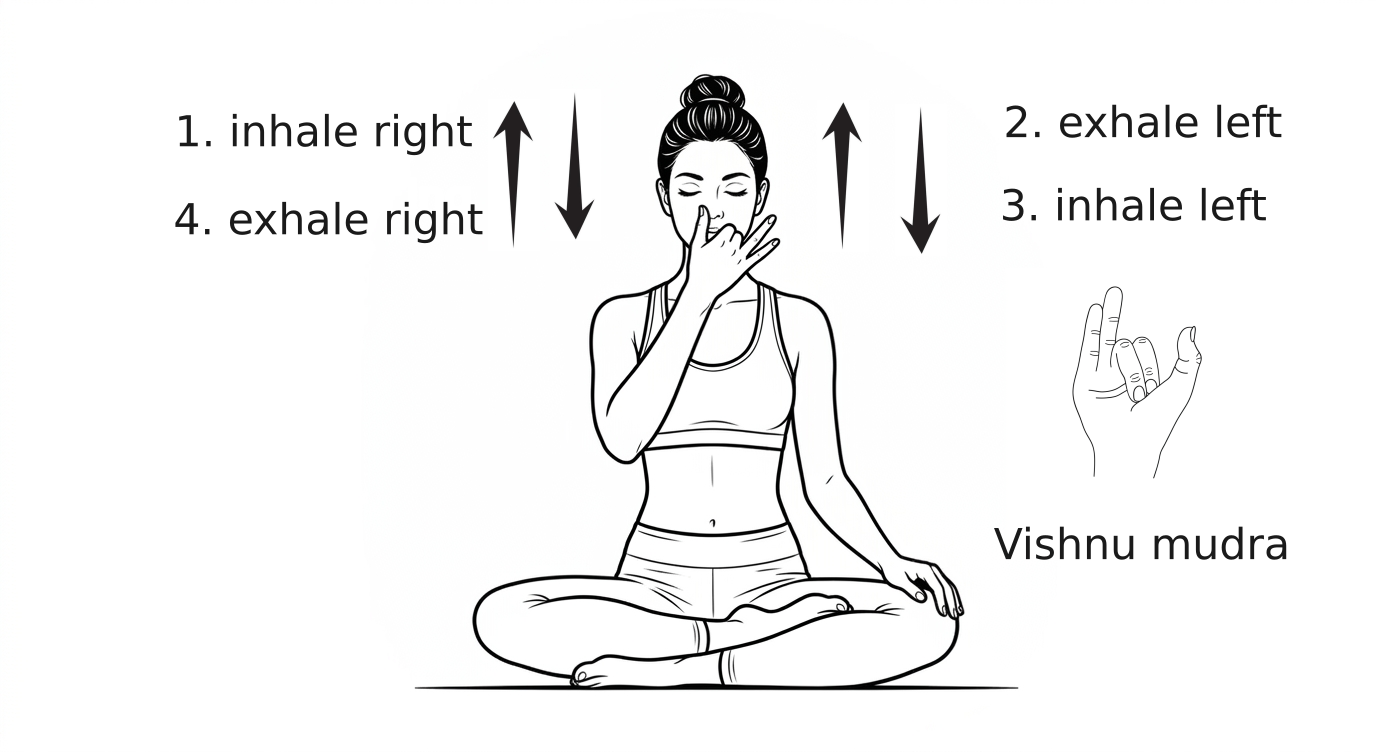
Nādīśuddhi Prānāyāma is also known as alternate nostril breathing.
Nādī means energy channels and śuddhi means cleaning.
It is a breathing practice that helps create a balanced and calm breathing pattern.
Important Points
- Practise regularly.
- Be aware of your breath.
- Let the breath flow naturally.
- Avoid jerks or strain.
Steps
- Sit in Padmāsana, Vajrāsana or Sukhāsana with the spine erect, face relaxed and eyes gently closed.
- Adopt Nāsika Mudra in the right hand. Keep the left hand in Cin Mudra on the left thigh.
- Close the right nostril with the thumb. Exhale through the left nostril. Inhale through the left nostril, hold the breath, then change the fingers to close the left nostril.
- Exhale through the right nostril. Inhale through the right nostril and change the fingers to close the right nostril.
- Exhale slowly through the left nostril. This is one round. Continue for three to five rounds.
- After the practice, drop the right hand, adopt Cin Mudra and observe the changes.
Benefits
- Promotes balance between both nostrils.
- Helps cleanse the nasal tract.
- May increase appetite.
- Helps reduce stress hormones.
10. Textbook Teacher Question
Page 162Exact textbook question:
“Ask them how they felt after the practice and if they were able to experience a calm state of mind.”
11. Bhrāmarī Prānāyāma
Page 162–163Bhrāmarī Prānāyāma produces a gentle humming sound similar to the sound of a bee.
The practice has a soothing effect on the mind and nervous system.
How to Perform Bhrāmarī Prānāyāma
- Sit in Sukhāsana with the spine erect, face smiling and eyes gently closed.
- Inhale deeply through both nostrils.
- As you exhale, make a steady, low-pitched humming sound like a bee.
- Feel the vibration of the sound in your head and body.
- Repeat the practice five times.
Benefits of Bhrāmarī
- Reduces stress and anxiety.
- Improves concentration and memory.
- May improve sleep quality.
- Promotes deep relaxation.
- Helps balance blood pressure.
12. Textbook Teacher Question
Page 163Exact textbook question:
“Ask the students whether they could feel the resonance during the practice. Ask about their state of mind after the practice.”
13. Pratyāhāra
Page 163Pratyāhāra is the yogic practice of turning our attention inward and managing the senses.
Our sense organs usually respond to things around us. Pratyāhāra teaches us to slow down and avoid unnecessary distractions.
Simple Meaning
How can Pratyāhāra help us?
- It can help reduce distractions.
- It encourages moderation in food and entertainment.
- It encourages balanced sleep and activities.
- It helps us focus on our inner journey.
14. Quick Revision
| Term | Easy Meaning |
|---|---|
| Prāna | Life force |
| Ayāma | Control and expansion |
| Puraka | Inhalation |
| Rechaka | Exhalation |
| Kumbhaka | Retention of breath |
| Sectional Breathing | Breathing through different sections of the lungs |
| Nādīśuddhi | Alternate nostril breathing |
| Bhrāmarī | Humming-bee breathing |
| Pratyāhāra | Managing the senses and reducing distractions |
15. Easy Chapter Questions and Answers
16. Remember
- Follow your teacher’s instructions.
- Keep the body relaxed.
- Keep the spine erect.
- Do not use jerky movements.
- Do not strain while breathing.
- Observe your breathing calmly.
- Practise regularly and gently.
Looking for a practice worksheet?Try this easy and useful worksheet for unit 5 chapter 4 to practise what you have learned. It includes important questions and activities to help you check your understanding, strengthen your concepts and prepare better for exams
Class 6 Khel Yatra Unit 5 Chapter 4, Prānāyāma, Pranayama Class 6, Class 6 Khel Yatra, Khel Yatra Unit 5 Chapter 4, Class 6 Physical Education, Yoga Class 6, Class 6 Khel Yatra notes, Class 6 Khel Yatra solutions, breathing practices, prānāyāma notes, Khel Yatra worksheet.